What Comes In With the Wind: The Link Between Dirty Building Exteriors and Compromised Indoor Air Quality
The Path of Least Resistance Runs Through Your Front Door
When environmental health specialists investigate indoor air quality complaints in commercial and industrial facilities, they rarely begin their assessment inside the building. Experienced industrial hygienists understand that the exterior envelope — walls, loading docks, rooflines, HVAC intake zones, and entryways — functions as the first and most consequential filter between the outdoor environment and the air your workforce breathes every day.
The problem is that this filter is rarely treated as one. Accumulated biological growth, particulate deposits, hydrocarbon residue, and pollutant films on exterior surfaces do not remain stationary. They migrate. And the mechanisms by which they enter your facility are both numerous and largely invisible to the untrained eye.
For facility managers who have invested significantly in interior air handling systems, HEPA filtration, and ventilation upgrades, the exterior of the building represents a critical gap in the contamination control strategy — one that professional power washing is uniquely positioned to close.
How Exterior Contamination Becomes an Indoor Problem
The migration pathway from a dirty exterior to a compromised interior environment operates through several distinct vectors, each of which intensifies with the degree of exterior neglect.
HVAC Intake Contamination
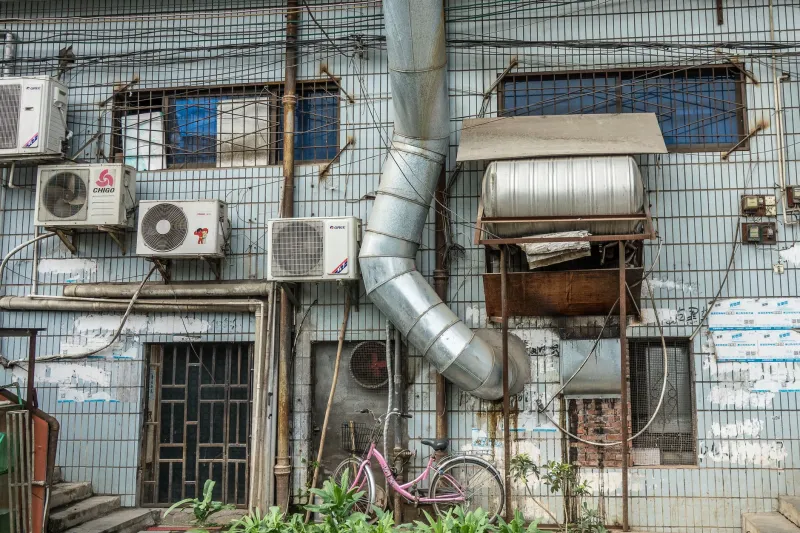
Rooftop and wall-mounted HVAC intake systems are designed to draw in ambient air and condition it for interior distribution. What they also draw in — when the surrounding surfaces are coated with biofilm, algae, mold spores, pollen aggregates, or fine particulate matter — is a continuous supply of biological and chemical contaminants. When exterior surfaces adjacent to or beneath intake units are colonized by microbial growth, every operating cycle of your air handling system becomes a delivery mechanism for those organisms into your ductwork and, ultimately, your occupied spaces.
Filters capture a portion of this load. They do not capture all of it, and they were never designed to compensate for the volume of biological material generated by severely neglected exterior surfaces.
Foot Traffic and Door Infiltration
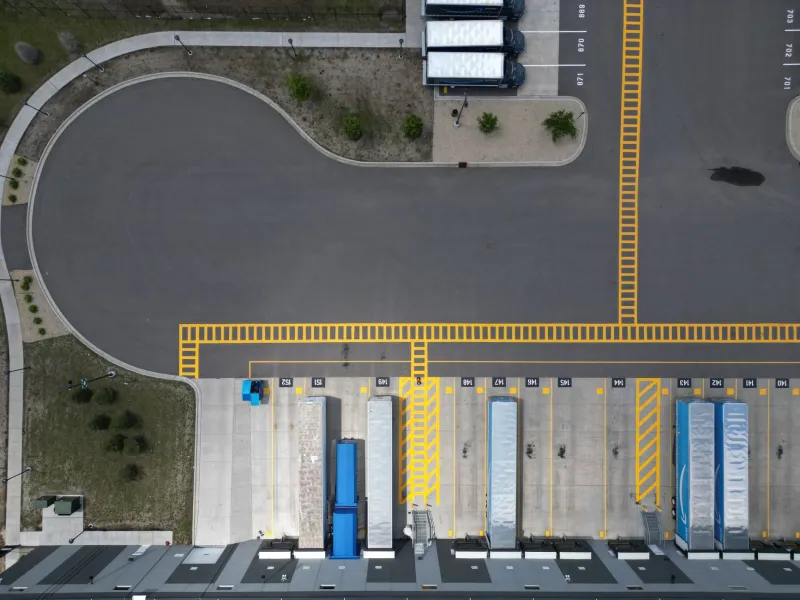
Every employee, vendor, and visitor who enters your facility walks across your exterior surfaces first. Contaminated concrete aprons, loading dock floors, entryway pavement, and exterior walkways serve as transfer media. Biofilm residue, mold-bearing particulates, and chemical deposits adhere to footwear and are carried directly into interior spaces with each entry. High-traffic entryways compound this effect exponentially over the course of a standard workday.
This vector is particularly significant in food processing, pharmaceutical manufacturing, and healthcare-adjacent facilities, where contamination thresholds are tightly regulated and the consequences of breach are severe.
Wind-Driven Particulate Migration
Exterior surfaces that have accumulated years of biological growth and atmospheric deposits become active sources of airborne particulates under the right wind conditions. Dried biofilm fragments, fungal spores, and fine dust embedded in surface irregularities become resuspended during weather events and migrate toward building openings. Facilities located in regions with consistent prevailing winds — or those positioned near industrial corridors, agricultural operations, or high-traffic roadways — face an elevated and continuous particulate load that compounds over time.
The Biological Dimension: Why Biofilm Matters Beyond Aesthetics
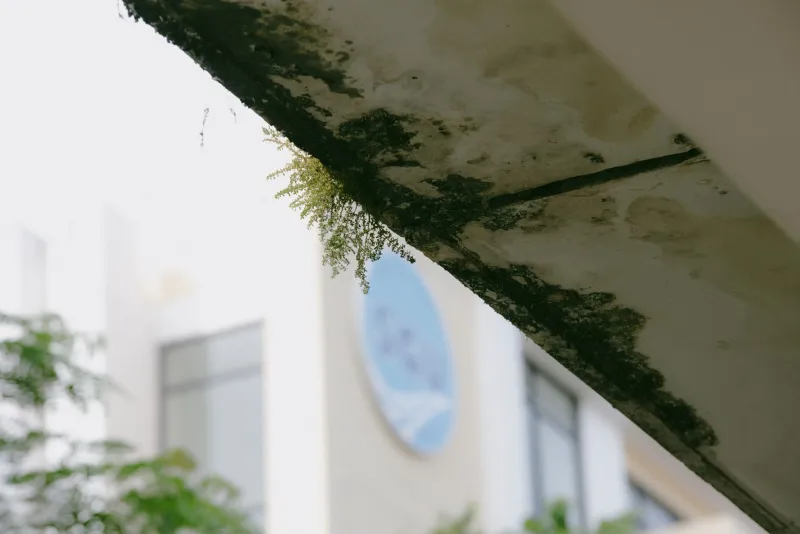
The dark streaking visible on building facades, the greenish-gray discoloration on concrete aprons, and the slick biological film coating exterior walls are frequently dismissed as cosmetic concerns. This characterization is inaccurate and, in facilities with workforce health obligations, potentially costly.
Biofilm communities — structured colonies of bacteria, algae, and fungi — produce metabolic byproducts and release spores as part of their normal lifecycle. When these communities establish themselves on surfaces adjacent to HVAC intakes, entryways, or ventilation louvers, they function as persistent biological emitters. Mycotoxins produced by certain mold species present in exterior biofilm have been associated with respiratory irritation, immune suppression, and chronic inflammatory responses in occupational exposure studies.
The Occupational Safety and Health Administration and the Environmental Protection Agency have both published guidance acknowledging the relationship between building envelope conditions and indoor environmental quality. Facilities that experience elevated absenteeism, recurring respiratory complaints among workers, or failed indoor air quality assessments without an obvious interior source should treat the building exterior as a primary investigative focus.
The Maintenance Gap That Liability Fills
From a risk management perspective, the connection between exterior neglect and indoor air quality creates a liability exposure that many facility operators do not account for in their insurance or compliance planning. Workers' compensation claims tied to occupational illness are significantly more difficult to defend when facility maintenance records reveal prolonged exterior neglect. Industrial hygiene assessments that trace contamination pathways back to the building envelope can implicate facility management decisions made — or not made — years prior.
Insurers and legal counsel increasingly scrutinize maintenance logs as part of occupational illness claim investigations. A documented, consistent exterior cleaning program provides material evidence of due diligence. Its absence provides the opposing argument.
This is not a theoretical exposure. Facilities in manufacturing, food service, warehousing, and commercial office environments have faced occupational health claims in which exterior maintenance conditions were identified as contributing factors. The cost of those proceedings consistently exceeds the cost of the preventive maintenance that would have precluded them.
What a Professional Exterior Cleaning Program Actually Addresses
The value of professional power washing in this context extends well beyond surface appearance. When performed by trained technicians using appropriate pressure settings, surfactant chemistry, and methodical sequencing, commercial-grade exterior cleaning:
- Eliminates established biofilm colonies before they reach spore-releasing maturity
- Removes hydrocarbon and chemical deposits from surfaces adjacent to air intake zones
- Clears entryway and walkway surfaces of the biological transfer media that foot traffic carries indoors
- Reduces the particulate reservoir on exterior walls, rooflines, and pavement that wind events mobilize
- Extends the effective service life of HVAC filtration systems by reducing the biological load those systems must process
Scheduled exterior cleaning, calibrated to the contamination rate of your specific facility environment, functions as a preventive environmental health measure — one that complements rather than duplicates your interior air quality investments.
Integrating Exterior Cleaning Into Your Facility Health Strategy
For facility managers responsible for workforce health outcomes, the practical implication is straightforward: exterior cleaning frequency should be determined not only by aesthetic standards or lease requirements, but by the contamination risk profile of the surrounding environment and the sensitivity of the operations conducted inside.
Facilities in humid climates, those adjacent to heavy vehicle traffic corridors, and those housing populations with elevated respiratory sensitivity warrant more frequent exterior maintenance cycles. Quarterly professional cleaning, supplemented by targeted interim treatments at high-migration points such as entryways and HVAC perimeters, represents a defensible standard of care for most commercial and light industrial environments.
The exterior of your building is not a separate system from the interior environment your workforce occupies. It is the first line of that environment — and the one most exposed to the biological and chemical pressures that ultimately determine what your people breathe. Treating it accordingly is not an operational luxury. It is a fundamental obligation of responsible facility stewardship.