What Your Loading Dock Says Before Anyone Shakes Your Hand
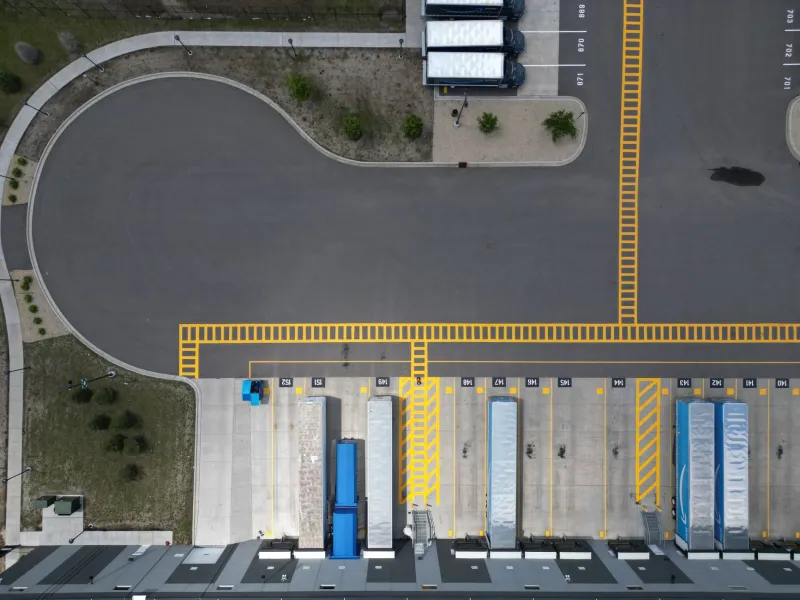
There is a moment that facility managers rarely account for in their client relationship strategies. It happens before the presentation begins, before the tour of the production floor, and before anyone has exchanged business cards. It happens the moment a prospective client or logistics partner pulls into your facility and takes in the full picture of your operation from the outside.
What they see in those first thirty seconds — the condition of your loading docks, the appearance of your fleet staging area, the cleanliness of the surfaces surrounding your most active operational zones — shapes a perception that no amount of polished salesmanship will fully correct afterward. Cleanliness in industrial environments is not aesthetic. It is a signal. And like most signals, it communicates whether you intend it to or not.
The Psychology of Industrial Cleanliness
Operational psychology research has consistently demonstrated that environmental cleanliness functions as a proxy for competence and reliability in professional settings. This phenomenon is well-documented in retail and hospitality contexts, but it operates with equal force in logistics, manufacturing, and distribution environments — perhaps more so, because the stakes in those industries are higher and the relationships are longer-term.
When a supply chain manager walks through a facility to evaluate a potential partnership, they are not consciously cataloging every stain on the dock floor or every oil streak on the vehicle apron. But their subconscious is doing exactly that. Research in environmental psychology suggests that disordered or visibly neglected physical environments trigger skepticism about the organization's internal processes, even when no direct evidence of process failure exists.
In plain terms: a dirty loading dock makes people wonder what else isn't being maintained. And in a business relationship built on the reliable movement of goods, that doubt is a competitive liability.
Loading Docks as Operational Mirrors
The loading dock is one of the most revealing spaces in any logistics or manufacturing facility. It is where the internal rhythm of the operation becomes visible to the outside world. Pallets move through it, vehicles queue at it, workers operate within it for extended shifts, and — critically — clients and auditors observe it.
Over time, loading docks accumulate a specific and stubborn profile of contamination. Diesel exhaust residue settles on dock levelers, walls, and overhead doors. Hydraulic fluid and engine oil leave persistent staining on concrete aprons. Spilled product, cardboard fiber, and organic debris collect in corners and along drainage channels. In colder months, road salt and de-icing chemicals add a corrosive layer to surfaces already under stress.
None of this is unusual. It is the natural byproduct of high-volume industrial activity. What separates high-performing facilities from those that struggle to retain client confidence is not whether contamination accumulates — it always does — but how consistently it is addressed.
Facilities that maintain a regular industrial cleaning schedule for their loading zones project a fundamentally different message than those that allow contamination to build until it becomes unavoidable. The former signals discipline. The latter signals drift.
Fleet Staging Areas: The Overlooked Front Door
For transportation and logistics companies, the vehicle yard is often the largest visible component of the operation. It is also, in many cases, the least maintained.
Fleet trucks that sit between routes accumulate road grime, exhaust carbon, and chemical residue from highway operations. When those vehicles are staged in a yard that is itself stained with oil, marked by tire tracks, and cluttered with the debris of daily operations, the cumulative visual effect is one of neglect — regardless of how well the vehicles themselves are mechanically maintained.
This matters for several reasons beyond aesthetics. Clients who visit a facility to observe fleet operations are evaluating the organization's commitment to its assets. A company that allows its equipment and its equipment environment to visibly deteriorate signals, however unintentionally, that it may apply the same tolerance for decline to service delivery, compliance documentation, or contractual obligations.
Conversely, a clean, well-maintained staging area with regularly washed vehicles and a pressure-washed concrete surface communicates investment — in the assets, in the operation, and in the relationships that depend on both.
The Employee Morale Dimension
The impact of facility cleanliness is not limited to external audiences. The workforce that operates within loading docks and vehicle staging areas every day is also responding to environmental conditions, whether consciously or not.
Occupational health research has consistently linked clean working environments to higher employee engagement, lower absenteeism, and improved safety outcomes. In industrial settings specifically, visible cleanliness reinforces the perception that management takes the workspace — and by extension, the workers within it — seriously. This is not a minor cultural consideration. In an industry where skilled drivers, logistics coordinators, and dock workers are in high demand and difficult to retain, the quality of the physical work environment is a legitimate competitive factor.
Facilities that invest in regular industrial cleaning of their high-traffic operational zones tend to see measurable improvements in worker satisfaction metrics. Those that do not often attribute turnover and morale issues to compensation or management dynamics without examining the environmental contribution.
What a Strategic Cleaning Program Actually Looks Like
Addressing the cleanliness of loading docks and fleet staging areas requires a different approach than standard facility janitorial services. These surfaces are subject to contamination types — petroleum products, heavy organic residue, road chemicals, and compacted grime — that respond only to industrial-grade pressure washing with appropriate chemical pre-treatment.
An effective program for most logistics and manufacturing facilities includes several components. Dock floors and aprons should receive hot water pressure washing on a scheduled basis — typically monthly for high-volume operations, quarterly for lower-throughput facilities. Vehicle staging areas benefit from periodic surface cleaning that removes oil accumulation and prevents the kind of chronic staining that eventually requires costly concrete restoration. Overhead dock doors, levelers, and surrounding wall surfaces should be included in the cleaning scope, as these areas accumulate diesel residue at a rate that is often underestimated.
Documentation of completed cleaning cycles adds an additional layer of value: it provides evidence of due diligence for insurance purposes, regulatory audits, and client facility reviews.
The Contract Renewal Calculation
The business case for maintaining clean operational zones ultimately comes down to a straightforward calculation. The cost of a consistent industrial cleaning program for loading docks and fleet staging areas is predictable, manageable, and small relative to the revenue associated with long-term client contracts.
The cost of losing a contract renewal because a prospective partner walked away from a facility visit with an unfavorable impression is neither predictable nor small. Neither is the cost of a safety incident on a contaminated dock surface, or the expense of restoring concrete that has been chemically degraded by years of unaddressed oil accumulation.
At Evershine Power Laundry, we work with logistics operators, manufacturers, and distribution facilities to develop cleaning schedules that keep their most visible operational spaces in the condition that client relationships and regulatory standards require. Industrial-grade clean is not a finishing touch — it is the foundation on which operational credibility is built, one pressure wash at a time.