Your Parking Lot Is Talking to Your Tenants and Clients. What Is It Saying?
The First Impression Happens Before Anyone Opens a Door
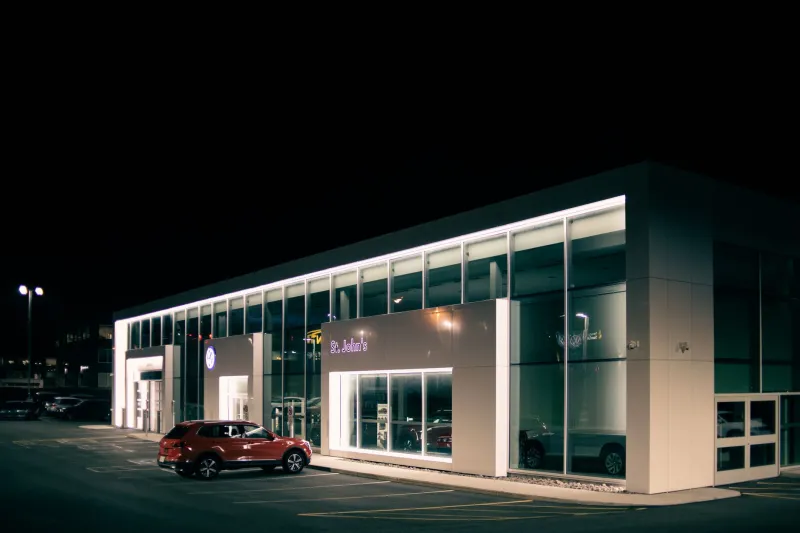
There is a moment that occurs before any business interaction takes place—before the handshake, the tour, the lease signing, or the retail transaction. It happens in the parking lot. A prospective tenant steps out of their car and, in the span of a few seconds, forms an impression of the property they are about to enter. That impression is shaped not by the lobby design or the conference room amenities, but by what is directly underfoot: the pavement.
Facility managers have historically treated parking lots as infrastructure rather than as communication. This is a costly misclassification. The exterior pavement of a commercial property is, in operational terms, a direct signal of how the facility is managed—and clients, tenants, and customers read that signal with more accuracy than most property owners acknowledge.
What the Data Reflects
The relationship between commercial property appearance and business outcomes is not anecdotal. Studies examining retail and commercial leasing behavior consistently identify exterior appearance as among the top factors influencing prospective tenant decisions. A survey conducted by the Building Owners and Managers Association found that property appearance ranked second only to location in the initial evaluation criteria of commercial tenants. Among retail customers, research published in the Journal of Retailing documented that exterior cleanliness directly influenced perceived product and service quality inside the establishment—a phenomenon known as the halo effect.
In practical terms, this means that a parking lot stained with oil, layered in accumulated grime, or visibly neglected is not a neutral backdrop. It is an active liability. It depresses first impressions before a single word is exchanged, and it shapes the credibility of every business operating within that facility.
The inverse is equally well supported. Properties with consistently clean, well-maintained exterior surfaces command higher lease rates, experience lower vacancy periods, and generate stronger repeat traffic from retail customers. The return on investment from exterior maintenance is not speculative—it is documented across multiple commercial property categories.
The Design Fallacy
When commercial properties underperform on tenant satisfaction or customer retention metrics, the instinct is often to look inward: refresh the lobby, update the signage, redesign the common areas. These investments are not without merit, but they frequently address the wrong problem.
A tenant who is already forming a negative impression in the parking lot is not going to be fully won over by a renovated elevator bank. The sequence of perception matters. Exterior appearance precedes interior experience, and no amount of interior investment fully compensates for a neglected exterior.
This is the design fallacy that many facility managers fall into: treating aesthetic problems as design problems rather than as maintenance problems. A parking lot does not need to be redesigned. It needs to be cleaned—systematically, professionally, and on a schedule that matches the demands of the property and its environment.
Assessing Your Property: A Practical Framework
Determining the appropriate cleaning frequency and method for exterior pavement requires an honest evaluation of four variables: traffic volume, climate exposure, surface type, and tenant or customer profile.
Traffic Volume
High-traffic commercial properties—retail centers, medical office complexes, logistics facilities, and multi-tenant office parks—accumulate surface contamination at a substantially faster rate than low-traffic properties. Oil deposits from vehicle drip, tire residue, and particulate accumulation from foot traffic all compound over time. A property seeing several hundred vehicle entries per day requires a meaningfully different maintenance schedule than one serving a small professional office.
Climate Exposure
Climate is perhaps the most underappreciated variable in exterior pavement maintenance planning. Properties in the Sun Belt face intense UV exposure that degrades surface sealants and accelerates oxidation of asphalt binders, causing fading and brittleness. Properties in the Rust Belt contend with freeze-thaw cycling and de-icing salt residue. Coastal properties in Florida, the Carolinas, or California face biological growth and salt spray. Each climate profile creates a distinct contamination pattern that informs both the cleaning method and the recommended frequency.
Surface Type
Asphalt and concrete behave differently under contamination and respond differently to cleaning interventions. Asphalt is more porous and more susceptible to petroleum-based staining; it also benefits from periodic hot-water extraction to address embedded contaminants. Concrete holds surface deposits more visibly but is generally more durable under high-pressure washing. Paving brick and permeable pavement systems require specialized approaches that avoid dislodging joint material. A one-size-fits-all cleaning protocol is rarely appropriate across a mixed-surface commercial property.
Tenant and Customer Profile
The expectations of the people using your facility matter. A Class A office building serving financial services firms carries a different image standard than an industrial warehouse complex. A medical facility has regulatory and perception pressures that make exterior cleanliness non-negotiable. A retail center anchored by national brand tenants often has contractual appearance standards embedded in lease agreements. Understanding who is evaluating your property—and what they expect—directly informs what level of maintenance investment is defensible.
The Frequency Question
For most commercial properties in the continental United States, a minimum quarterly power washing program for parking areas and exterior pavement represents a reasonable baseline. High-traffic properties in humid or high-pollution environments should consider bi-monthly service. Properties in regions with severe winter weather benefit from a dedicated post-winter cleaning cycle to address salt accumulation and debris left by snow removal operations.
The objective is not a fixed calendar. It is a consistent standard. The appearance of your parking lot should not vary dramatically between seasons or degrade visibly between service visits. When it does, the maintenance interval is insufficient for the conditions the property faces.
Operationalizing Exterior Standards
For facility managers seeking to build a defensible maintenance program, the starting point is documentation. Photograph the current condition of all exterior pavement areas and establish a baseline. Engage a professional power washing contractor for an initial assessment—this creates a condition record and identifies any areas requiring remediation before a maintenance program can be effective.
From there, develop a written service schedule that specifies frequency, surface coverage, and the cleaning methods appropriate for each area. Build that schedule into the facility's annual maintenance budget with the same line-item discipline applied to HVAC service or elevator maintenance. Exterior cleaning is not discretionary spending. It is operational infrastructure.
The Standard Your Property Communicates
At Evershine Power Laundry, we work with facility managers across a range of commercial property types who have come to understand that the exterior pavement is not peripheral to their property's performance—it is central to it. Industrial-grade cleaning applied on a structured schedule is what separates a property that communicates operational excellence from one that silently communicates neglect.
Your parking lot is already making an impression. The only question is whether that impression is working for you or against you.