Compliance Is Not Optional: Decoding the Cleaning Requirements OSHA, Health Departments, and Insurers Expect from Industrial Facilities

Why Industrial Cleaning Compliance Is More Complex Than Most Managers Realize
The phrase "keep it clean" takes on an entirely different meaning inside an industrial facility. For a warehouse manager, it may mean maintaining clear emergency egress routes. For a food processing plant supervisor, it means documented sanitation protocols that satisfy both the FDA and a state health department inspector. For a manufacturing facility risk manager, it means satisfying the loss-control requirements of a commercial insurer who has every incentive to scrutinize your cleaning records after an incident.
What unites all of these scenarios is a common problem: many facility managers in the United States are operating under a fragmented understanding of their actual obligations. They know cleaning matters. What they are less certain about is which specific tasks are legally required, which are strongly recommended, and which are purely discretionary — and what the consequences are for getting those distinctions wrong.
This guide addresses that gap directly.
OSHA's Cleaning-Related Standards: What the Regulations Actually Say
The Occupational Safety and Health Administration does not publish a single document titled "Industrial Cleaning Requirements." Instead, its cleaning-related mandates are distributed across multiple standards, and failure to cross-reference them is a common source of compliance gaps.
Under 29 CFR 1910.22 — the General Industry Walking-Working Surfaces standard — employers are legally required to maintain all workplaces in a clean, orderly, and sanitary condition. Floors must be kept clean and dry where possible, and drainage must be maintained where wet processes are used. This standard has direct implications for power washing in warehouses and manufacturing facilities, where floor surfaces accumulate oil, chemical residue, and organic material that create both slip hazards and sanitation concerns.
OSHA's Hazard Communication Standard (29 CFR 1910.1200) intersects with cleaning when chemical residues from industrial processes accumulate on surfaces. Facilities that allow such buildup to persist without a documented cleaning protocol may face citations not only for sanitation failures but for inadequate hazard management.
For facilities where workers are exposed to bloodborne pathogens — including certain food processing environments — 29 CFR 1910.1030 mandates written exposure control plans that include specific decontamination and cleaning procedures.
What facility managers frequently miss: OSHA does not require you to perform these tasks internally. It requires that they be performed and documented. Professional cleaning contractors with industrial-grade equipment and documented service records satisfy the "performed and documented" standard effectively.
Health Department Requirements: Where Federal and State Standards Diverge
Food processing plants and commercial food service operations face a second regulatory layer that operates independently of OSHA. The FDA's Food Safety Modernization Act (FSMA) established Current Good Manufacturing Practice (CGMP) requirements under 21 CFR Part 117, which mandate that facilities maintain buildings, fixtures, and equipment in a sanitary condition sufficient to prevent contamination of food products.
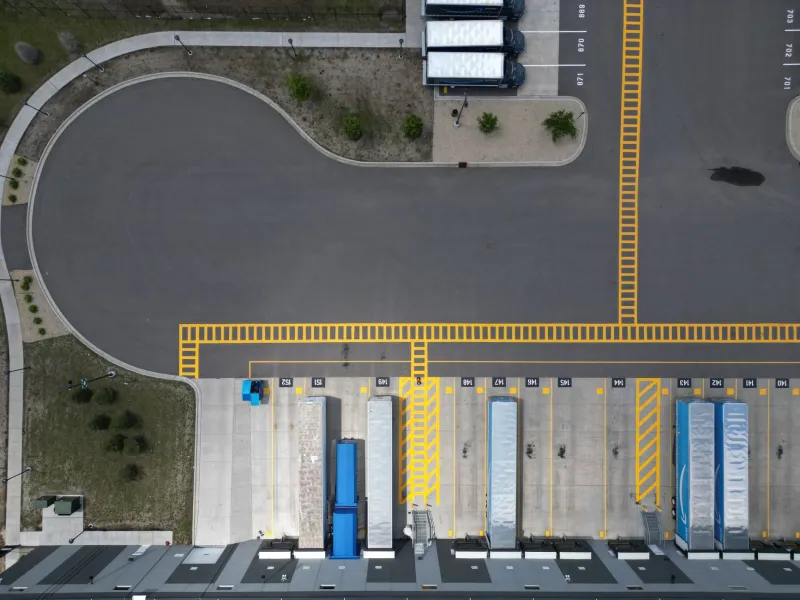
This is not a vague aspiration. Under CGMP, facilities must be able to demonstrate — through records, schedules, and inspection logs — that cleaning and sanitation activities are occurring at appropriate frequencies and with appropriate methods. Exterior surfaces, loading docks, drainage systems, and waste handling areas are explicitly within scope.
State health departments add another layer. Inspection criteria vary by state, but most U.S. jurisdictions conduct unannounced inspections of food-related industrial facilities and evaluate exterior cleanliness as part of the overall sanitation assessment. A facility that maintains immaculate interior processing areas but neglects its exterior loading dock, dumpster enclosure, or drainage channels can still fail an inspection — and face operational shutdowns, fines, or mandatory corrective action plans.
Checklist for food processing and food-adjacent facilities:
- Documented exterior cleaning schedule with dated service records
- Drainage channel and floor drain cleaning frequency log
- Loading dock surface cleaning records
- Grease trap and waste enclosure sanitation log
- Pest control interface documentation (exterior cleanliness is a primary factor in pest control audits)
What Your Insurance Company Is Looking for — and Not Telling You
Commercial insurers, particularly those underwriting general liability and property policies for industrial facilities, conduct loss-control inspections that evaluate cleaning and maintenance practices as risk indicators. What many facility managers do not realize is that the findings from these inspections can directly affect premium rates, coverage terms, and claim outcomes.
A facility with documented, recurring professional cleaning of exterior surfaces, loading areas, and high-traffic zones presents a fundamentally different risk profile than one without such records. In the event of a slip-and-fall claim, a contamination incident, or a fire exacerbated by grease accumulation, the presence or absence of cleaning documentation becomes a central factor in how the insurer responds.
Some commercial policies include explicit maintenance requirements as conditions of coverage. Failure to meet those conditions — even if the failure is not directly related to the specific incident — can give insurers grounds to contest or reduce claim payouts. Facility managers who have never reviewed the maintenance requirements embedded in their policy language may be carrying more uninsured risk than they recognize.
Legally Required vs. Recommended Best Practice: Drawing the Line
To clarify the distinction that most industrial facility managers need most, consider the following framework:
Legally mandated (failure creates regulatory and legal liability):
- Maintaining clean walking-working surfaces under OSHA 29 CFR 1910.22
- Sanitation documentation under FDA CGMP for food processing environments
- Decontamination procedures under applicable OSHA pathogen standards
- State health department exterior sanitation requirements for food-related facilities
Insurance-required (failure may affect coverage):
- Maintenance practices specified in policy conditions
- Loss-control recommendations issued after insurer inspections (these are often not optional if documented)
Strongly recommended best practice (failure creates operational and reputational risk):
- Scheduled power washing of exterior building surfaces, parking areas, and loading docks
- Documented fleet and equipment washing programs
- Seasonal deep-cleaning of drainage infrastructure
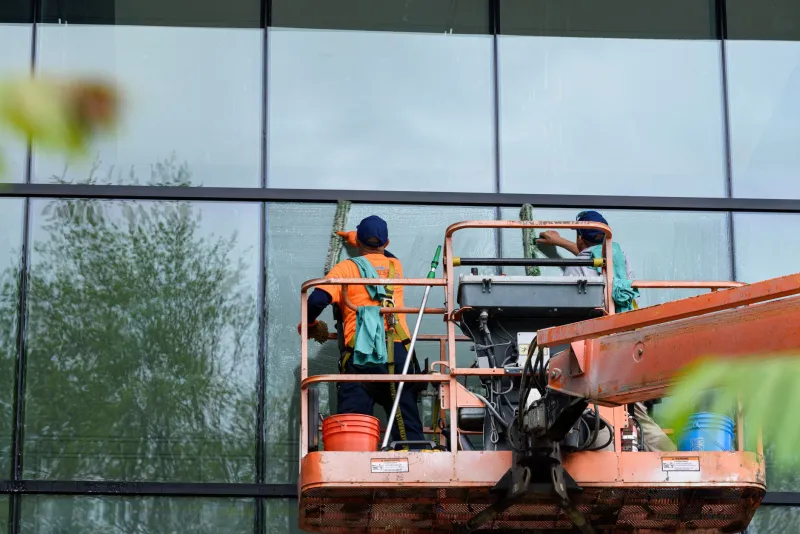
Professional power washing services address obligations across all three categories. Exterior surface cleaning prevents the accumulation of hazardous materials that create OSHA exposure, satisfies health department cleanliness expectations, and demonstrates the proactive maintenance posture that insurers reward with favorable terms.
Building a Defensible Cleaning Program
The most important word in industrial cleaning compliance is not "clean" — it is "documented." Regulators, insurers, and courts evaluate not only what was done, but whether a facility can prove it was done, when it was done, and by whom.
At Evershine Power Laundry, we provide industrial facility clients with service documentation that supports compliance records. A professional cleaning program, structured around your regulatory calendar and insurer requirements, is not an overhead cost — it is a risk management investment with a direct bearing on your operational continuity and liability exposure.
The facilities that face the most severe regulatory and insurance consequences are rarely those that ignored cleaning entirely. They are the ones that cleaned inconsistently, documented poorly, and discovered the gap only after an inspection, an incident, or a claim. A structured, professionally executed cleaning program closes that gap before it becomes a liability.