Clean Exteriors, Stronger Leases: The Financial Case for Professional Property Maintenance

The Metric Most Property Managers Overlook
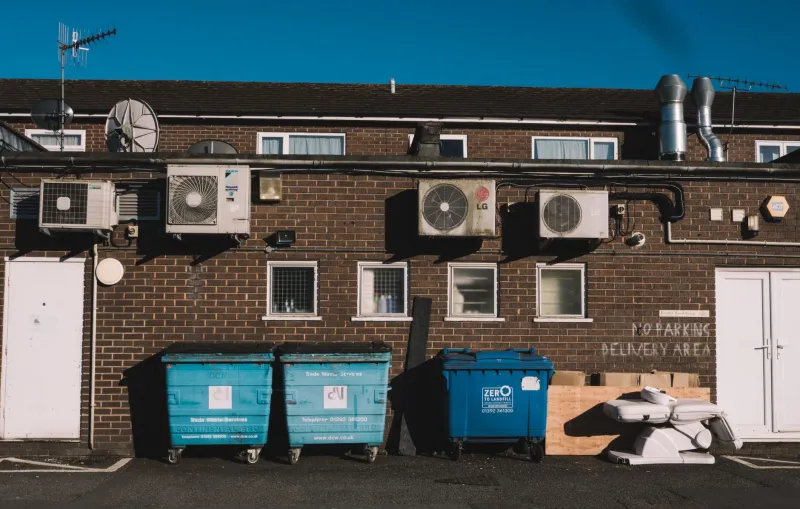
When commercial property owners evaluate their asset performance, they scrutinize cap rates, occupancy percentages, and net operating income. Rarely does the conversation begin with the condition of the building's façade, parking structure, or loading areas. Yet research into tenant behavior and commercial real estate trends consistently reveals a direct correlation between a property's physical presentation and its ability to retain occupants at favorable lease terms.
The logic is straightforward, even if the numbers are often invisible: tenants who feel pride in their business address are less likely to relocate. Tenants who encounter cracked, stained, or deteriorating exteriors begin calculating the cost of moving long before their lease expiration date arrives.
For facility managers, this reframes professional cleaning not as a maintenance expense, but as a retention strategy with a quantifiable return.
What Tenants Actually Notice — And When
Commercial tenants evaluate their environment on a rolling basis. A prospective tenant tours a property once and makes a decision. An existing tenant, however, walks through the parking lot, past the building entrance, and through the common areas dozens of times each month. Every observation either reinforces confidence in the landlord or erodes it.
Industry surveys of commercial tenants in the United States have found that exterior cleanliness ranks among the top five factors influencing lease renewal decisions — often ahead of amenity upgrades and sometimes ahead of modest rent increases. Tenants interpret a well-maintained exterior as evidence that management is attentive, responsive, and financially stable. A neglected one signals the opposite.
This perception gap has direct consequences. When renewal negotiations begin, tenants who feel underserved by their environment enter those conversations with leverage — and they use it. Concessions, reduced rent escalations, and shorter renewal terms are frequently the cost a landlord pays for deferred maintenance.
The Vacancy Cost That Hides in Plain Sight
Few financial outcomes in commercial real estate are more expensive than a vacant unit. Beyond the lost rental income, vacancy triggers additional costs: broker commissions on new leases, tenant improvement allowances, legal fees, and the extended carrying costs of an unoccupied space. In many U.S. markets, a single month of vacancy on a mid-size commercial unit can exceed an entire year's exterior cleaning budget.
This arithmetic changes the conversation around professional power washing and commercial cleaning services dramatically. When a $3,000 to $6,000 annual cleaning contract for a mid-size commercial property is weighed against even a partial month of vacancy — which can run $8,000 to $25,000 or more depending on market and unit size — the investment calculus becomes difficult to argue against.
The question facility managers should be asking is not whether they can afford professional cleaning. The more accurate question is whether they can afford the vacancy risk that deferred cleaning creates.
Lease Renewal Negotiations and the Appearance Advantage
Property managers who maintain consistently clean, well-presented facilities enter renewal negotiations from a position of strength. Tenants who are satisfied with their environment are less likely to solicit competing proposals. They are also less likely to use cosmetic deterioration as a bargaining chip to extract rent reductions or landlord concessions.
Conversely, tenants who have documented legitimate maintenance complaints — including exterior grime, stained entryways, or neglected common areas — arrive at the negotiating table with a list. That list has monetary value, and experienced commercial tenants and their brokers know how to deploy it.
A facility manager who can demonstrate a consistent, professional cleaning schedule has a concrete rebuttal to those complaints. More importantly, they have likely prevented those complaints from ever materializing in the first place.
Property Valuation and the Long Game
Beyond individual lease cycles, the cumulative condition of a commercial property affects its appraised value and its attractiveness to institutional buyers. Properties that present well during due diligence — with clean exteriors, maintained parking areas, and documented maintenance histories — command stronger valuations than comparable properties showing signs of deferred upkeep.
Appraisers and commercial real estate investors in the United States are trained to look for deferred maintenance as a risk signal. Stained concrete, oxidized building surfaces, and deteriorating loading areas are not merely cosmetic concerns — they raise questions about what else may have been deferred, and they invite downward adjustments to valuation models.
A consistent professional cleaning program, properly documented, becomes part of the property's maintenance record. That record has value at the negotiating table when the property is eventually sold or refinanced.
Positioning the Cleaning Budget as Asset Protection
The most effective facility managers are those who translate cleaning expenditures into asset protection language when presenting budgets to ownership. Rather than defending a line item, they are making the case for a risk mitigation strategy with a demonstrable return.
Professional power washing and commercial cleaning services — performed on a scheduled, documented basis — address surface degradation before it becomes structural, prevent the cosmetic deterioration that erodes tenant confidence, and signal to the market that the property is actively managed.
At Evershine Power Laundry, we work with facility managers across a range of commercial property types to build cleaning programs that align with both budget constraints and asset protection goals. The conversation rarely starts with aesthetics. It starts with retention, valuation, and the financial cost of neglect.
The Bottom Line
Clean properties retain tenants. Retained tenants reduce vacancy costs. Reduced vacancy costs improve net operating income. Improved net operating income strengthens property valuation. This chain of causation is not theoretical — it is reflected in the lease renewal rates and vacancy histories of well-managed commercial properties across the United States.
Facility managers who treat professional cleaning as a discretionary expense are, in effect, accepting a higher risk of the outcomes they are paid to prevent. Those who treat it as a foundational element of asset management are protecting something far more valuable than curb appeal — they are protecting the property's financial performance over the long term.