When Concrete Starts Losing the Fight: The Structural Price of Neglected Commercial Surfaces
The Damage You Cannot See Is the Damage That Costs the Most
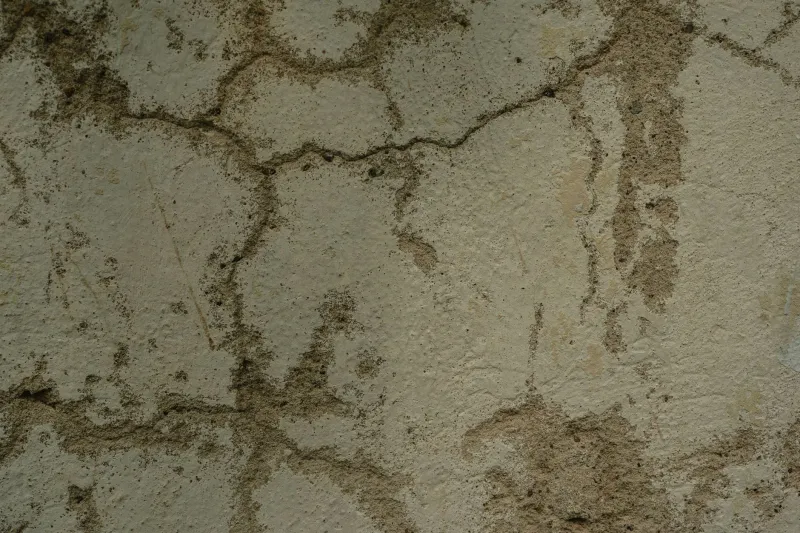
Facility managers are trained to respond to visible problems. A cracked facade, a flooded loading dock, a broken HVAC unit—these demand immediate attention precisely because they are impossible to ignore. Concrete degradation, by contrast, operates on a different timeline. It begins invisibly, progresses quietly, and announces itself only when the repair bill has already become substantial.
The term "concrete cancer" is not hyperbole. It refers to a cascading set of chemical and biological processes that, left unchecked, can compromise the structural integrity of commercial surfaces over a period of years. What makes this phenomenon particularly costly for property owners is that it is almost entirely preventable—and almost universally underestimated.
The Three Agents of Concrete Breakdown
To understand why deferred surface cleaning is a structural liability, it helps to understand exactly what is happening at the material level.
Mineral Deposit Infiltration
Hard water runoff leaves behind calcium carbonate and magnesium deposits that accumulate on concrete surfaces over time. These minerals are not merely cosmetic. As they build up, they create a porous, crystalline layer that traps additional moisture against the concrete surface. Water is concrete's most persistent adversary. When it penetrates through micro-cracks and pores, it expands during freeze-thaw cycles—a phenomenon especially damaging across the northern and midwestern United States, where temperature swings are severe. Each cycle widens existing fractures and introduces new ones, accelerating the spalling and scaling that eventually requires full slab replacement.
Biological Growth: Algae, Moss, and Lichen
In humid climates—the Gulf Coast, the Pacific Northwest, the Mid-Atlantic corridor—biological growth on concrete surfaces is not a seasonal inconvenience. It is a year-round structural threat. Algae and moss retain moisture against the surface, maintaining the wet conditions that promote chemical degradation. Lichen, often dismissed as purely aesthetic, produces organic acids that etch directly into concrete, dissolving the calcium silicate hydrate that gives the material its compressive strength. A surface that looks merely green or stained may already be experiencing measurable material loss at the microscopic level.
Salt Accumulation and Chloride Attack
Commercial properties in coastal regions and cold-weather states face an additional threat: chloride-induced corrosion. Road salts applied during winter months, combined with marine spray in coastal environments, introduce chloride ions into concrete through surface absorption. When those ions reach the steel reinforcement embedded within the slab or structure, they initiate a corrosion process that produces iron oxide—rust—which expands in volume, generating internal pressure that cracks the surrounding concrete from within. This is the mechanism that causes the characteristic flaking and delamination seen on aging parking decks, loading platforms, and exterior walkways across commercial properties nationwide.
What Deferred Maintenance Actually Costs
The financial argument for preventive cleaning is straightforward, though it is rarely framed with enough precision to compel action.
Consider a mid-sized commercial property in the Midwest with approximately 40,000 square feet of exterior concrete surface—parking areas, sidewalks, loading zones, and entryways. A professionally executed power washing program for such a property, conducted on a biannual schedule, typically falls within a range that facility managers can absorb as routine operating expense. The cost per square foot is modest, the disruption to operations is minimal, and the outcome is measurable.
Now consider the alternative. When mineral deposits are allowed to accumulate unchecked for three to five years, the remediation process moves from pressure washing into chemical treatment and mechanical surface preparation—significantly more intensive interventions at significantly higher price points. If biological growth has established deep root systems in surface pores, or if chloride infiltration has reached the rebar layer, the conversation shifts from cleaning to structural repair: crack injection, slab grinding, or full replacement of affected sections. Industry estimates for commercial concrete restoration regularly reach $15 to $40 per square foot, placing the total remediation cost for a property of the size described above well into six-figure territory.
The gap between prevention and remediation is not marginal. It is transformative.
The Facility Manager's Blind Spot
Why does this damage occur so consistently across commercial properties when the preventive solution is this well understood? Part of the answer lies in how facility budgets are structured. Preventive maintenance expenditures are often scrutinized more heavily than emergency repair costs, which tend to be absorbed under different line items and framed as unavoidable. A facility manager who proposes a biannual exterior cleaning program may face pushback; the same manager responding to a structural failure rarely does.
This dynamic creates a perverse incentive structure that effectively rewards deferred maintenance—until the deferred cost arrives at scale.
The other factor is visibility. Concrete degradation does not look alarming in its early stages. A slight discoloration, a faint biological stain, a modest mineral haze—none of these trigger urgency. By the time the surface visibly communicates that something is structurally wrong, the damage has typically been accumulating for years.
Building a Preventive Case for Your Property
For facility managers seeking to make a defensible case for regular exterior cleaning investment, the framework is not complicated.
Begin with a surface audit. Identify all concrete areas on the property and note the specific exposure conditions each faces: freeze-thaw cycling, biological growth potential, proximity to de-icing salts, or coastal salt spray. Each of these factors elevates the cleaning frequency required to maintain structural integrity.
Next, obtain a professional assessment of current surface condition. A qualified power washing contractor can identify early-stage mineral buildup, biological infiltration, and surface scaling before those conditions progress to the point of requiring structural intervention. That assessment creates a documented baseline—useful both for maintenance planning and for insurance or liability purposes.
Finally, model the cost comparison honestly. The numbers, presented clearly, make a compelling case on their own.
Industrial-Grade Prevention Is the Standard
At Evershine Power Laundry, we approach commercial concrete maintenance as a structural discipline, not a cosmetic one. The equipment and techniques applied to commercial surfaces must match the scale and severity of the threats those surfaces face. Consumer-grade pressure washing is insufficient for the mineral concentrations and biological loads that accumulate on high-traffic commercial concrete. Industrial-grade power washing, conducted at appropriate intervals with the correct chemical treatments for each surface condition, is what actually interrupts the degradation cycle.
The concrete beneath your facility is not passive. It is either being maintained or it is being consumed. The only variable is how long you wait to intervene—and what that interval ultimately costs.