Building a Power Washing Schedule That Pays for Itself: A Framework for Facility Managers
For most facility managers, power washing is treated as a reactive expense—something ordered when a surface looks bad enough to prompt a complaint. This approach is understandable given the competing demands on maintenance budgets, but it is also demonstrably more costly than the alternative. A proactive, frequency-driven cleaning schedule is not just a maintenance best practice; it is a capital preservation strategy with a calculable return on investment.
The challenge is that most commercial property operators lack a structured method for determining how often professional cleaning is actually warranted. Frequency decisions are often made by intuition, by comparison with neighboring properties, or by whatever the previous facility manager happened to schedule. None of these approaches account for the specific variables that drive both cleaning costs and the financial consequences of deferred maintenance.
This framework is designed to change that.
Step One: Define the Property Profile
Before any frequency decision can be made, a facility manager must establish a clear picture of the property's exposure and use characteristics. Four variables are most consequential:
Property Type — A retail strip center, an office park, a hotel, an industrial warehouse, and a multi-family residential complex each accumulate contaminants at different rates and in different patterns. High-traffic retail surfaces collect oils, chewing gum, food residue, and exhaust deposits. Hospitality properties face grease buildup near kitchen exhausts and biological growth on pool decks and walkways. Industrial sites contend with chemical residue, heavy particulate matter, and grease accumulation in loading areas.
Geographic Location and Climate — Properties in humid, warm climates—particularly in the Southeast, Gulf Coast, and Pacific Northwest—experience accelerated biological growth, including algae, mold, and lichen. Coastal properties face salt air corrosion on surfaces and fixtures. Properties in colder northern climates deal with road salt, de-icing chemical residue, and freeze-thaw cycles that open micro-cracks in masonry, accelerating contamination penetration. Each climate profile implies a different baseline cleaning frequency.
Foot and Vehicle Traffic Volume — High-traffic surfaces degrade faster. A shopping center entrance that receives several thousand pedestrians daily will accumulate grime at a rate that bears no comparison to a low-traffic corporate campus. Similarly, a distribution center with constant heavy truck traffic in its loading bays will require more frequent attention to concrete surfaces than a lightly used storage facility.
Surface Material Composition — Porous materials such as concrete, brick, and natural stone absorb contaminants more readily than sealed or non-porous surfaces. Once embedded, organic matter and staining compounds are more difficult to remove and more likely to cause long-term surface degradation. Porous surfaces in exposed locations warrant more frequent professional cleaning than sealed or composite cladding in sheltered positions.
Step Two: Establish a Baseline Frequency by Property Type
Industry experience and building maintenance standards suggest the following baseline cleaning frequencies as a starting point, subject to adjustment based on the variables above:
- Retail and Restaurant Properties: Quarterly cleaning of high-traffic exterior surfaces, with semi-annual full-facade and parking area treatments.
- Hospitality (Hotels, Resorts, Event Venues): Quarterly full-exterior cleaning, with monthly attention to pool decks, entryways, and outdoor dining surfaces.
- Office Parks and Corporate Campuses: Semi-annual full-exterior treatment, with quarterly attention to entryways, parking structures, and sidewalks.
- Industrial and Warehouse Facilities: Quarterly cleaning of loading docks, concrete aprons, and drainage channels; semi-annual facade and perimeter treatment.
- Multi-Family Residential Complexes: Semi-annual full-property cleaning, with quarterly treatment of high-use areas such as breezeways, pool decks, and parking surfaces.
These baselines assume average climate conditions. Properties in high-humidity or high-traffic environments should increase frequency by one interval. Properties in particularly harsh coastal or industrial environments may require monthly attention to specific surfaces.
Step Three: Calculate the Cost of Deferral
The financial argument for regular professional cleaning rests on a comparison between two cost streams: the cost of scheduled maintenance versus the cost of deferred maintenance.
Surface degradation follows a well-established progression. Concrete surfaces that are not regularly cleaned develop embedded staining and biological growth that accelerates carbonation and surface erosion. Industry data from the Portland Cement Association indicates that concrete in commercial applications can lose meaningful surface integrity within five to ten years when exposed to ongoing biological contamination without cleaning intervention. Resurfacing or replacement of commercial concrete runs between $3 and $10 per square foot depending on scope and region—a figure that dwarfs the cost of preventative cleaning across the same period.
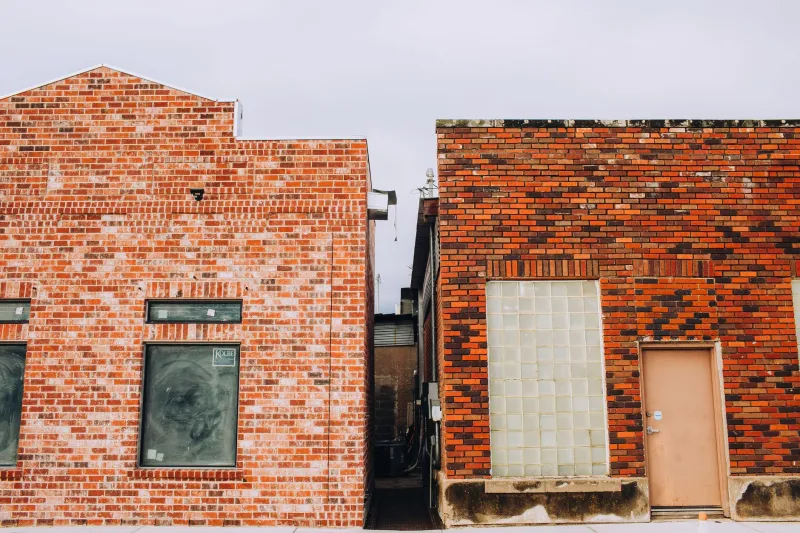
Brick and masonry facades subject to uncleaned algae and moss growth experience accelerated mortar deterioration. Tuckpointing and mortar repair on a commercial building facade can run from $500 to several thousand dollars per section, and widespread repointing projects on a mid-sized commercial building can reach five to six figures. Regular cleaning that removes biological growth before it penetrates mortar joints is materially cheaper.
Painting and coating systems are similarly affected. Surfaces that are regularly cleaned maintain coating adhesion and integrity significantly longer than neglected surfaces. Commercial exterior painting typically costs between $1.50 and $4.00 per square foot. Extending a paint cycle by even two years on a 20,000-square-foot facade represents a substantial deferred capital expenditure—one that a cleaning program costing a fraction of that amount annually can achieve.
Step Four: Account for Revenue and Tenant Impact
Asset value is not determined solely by maintenance costs—it is also a function of income generation. For retail and hospitality properties, curb appeal directly influences customer traffic and tenant retention. Research from the Building Owners and Managers Association (BOMA) consistently identifies exterior appearance as a primary factor in tenant satisfaction and lease renewal decisions.
A property that presents a clean, well-maintained exterior commands stronger lease rates and lower vacancy rates than a comparable property with a neglected appearance. For a 50,000-square-foot retail center, a modest improvement in occupancy rate of even one or two percentage points translates to tens of thousands of dollars in additional annual revenue. The cleaning investment that contributes to that outcome is, in practical terms, a revenue-generating activity.
Step Five: Build the Annual Cleaning Budget
With frequency baselines established and cost-of-deferral figures in hand, the annual cleaning budget becomes a straightforward calculation. Professional power washing services for commercial properties are typically priced per square foot, per surface type, or as a project rate depending on scope. A qualified provider will offer a site assessment and a multi-visit annual service agreement that reduces per-visit cost compared to one-off scheduling.
Facility managers should request itemized proposals that distinguish between surface types and treatment methods, allowing for accurate year-over-year budget comparison and scope adjustment as property needs evolve.
The Strategic Value of Consistency
The most important variable in any power washing ROI calculation is not frequency or unit cost—it is consistency. A property that receives professional cleaning on a disciplined, scheduled basis accumulates far less remediation liability than one managed reactively. Surfaces stay cleaner between visits, biological growth is interrupted before it establishes deep colonies, and the overall condition of the property reflects the operational standards that tenants, customers, and investors expect.
At Evershine Power Laundry, we work with facility managers to build cleaning programs that are calibrated to the specific demands of each property—not generic schedules applied uniformly regardless of conditions. Industrial-grade clean, delivered on a schedule that makes financial sense, is how commercial properties protect their value over time. The math, when examined carefully, is not complicated. The cost of doing nothing is always higher than the cost of doing it right.