Beyond the Wash Cycle: Why Your Laundry Room Belongs on the Power Washing Calendar
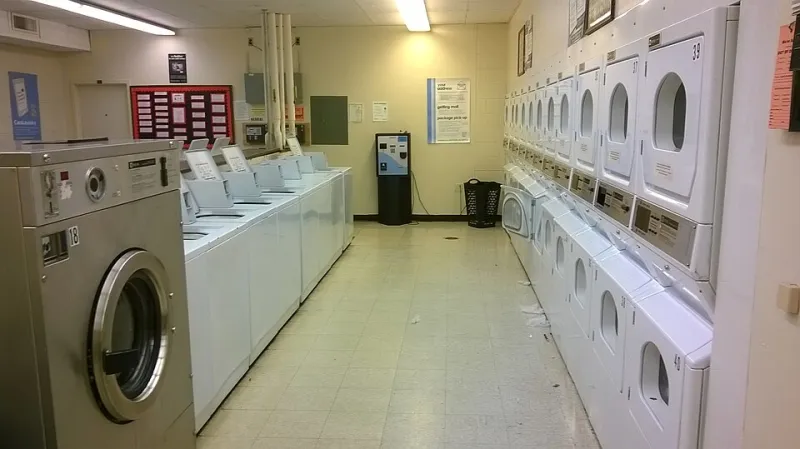
Photo: Bbfd, CC0, via Wikimedia Commons
Commercial laundry rooms are often managed as a utility: machines run, linen moves, and the room itself receives attention only when a washer leaks or a dryer fails. That framing misses a critical maintenance reality. The same lint, detergent residue, moisture, and organic soil that move through a laundry operation do not stay inside the machines. They settle on floors, walls, exhaust pathways, carts, folding tables, and equipment exteriors. Over time, those deposits create conditions in which biofilm can establish and cross-contamination can persist between loads. For facilities that depend on clean linens and uniforms—hospitals, hotels, restaurants, gyms, and industrial operations—the laundry room deserves a place on the same power washing and deep-cleaning calendar as production floors and loading docks.
The Contamination Map Inside a Working Laundry
A laundry room is a high-moisture, high-organic environment. Wet linen carries soil into the room. Detergent and softener residue film over hard surfaces. Lint migrates beyond traps and settles on ledges, pipes, and walls. Dryer exhaust systems move warm, humid air that can leave condensation behind. Each of these conditions is manageable in isolation; together, they create a persistent reservoir of material that ordinary housekeeping may spread rather than remove.
The highest-risk zones are usually predictable. Floors around washers and dryers collect lint, detergent drips, and standing water. Wall surfaces behind equipment absorb moisture and residue. Exhaust pathways and lint traps accumulate flammable material and reduce airflow. Folding tables, carts, and shelving can transfer contamination from one batch of linen to the next. Even machine exteriors—especially control panels, hinges, and lower panels—can harbor grime that staff touch repeatedly during a shift.
Why Mopping and Wiping Are Not Enough
Routine cleaning is essential, but it has limits in a commercial laundry. Mopping can move detergent residue and organic soil into floor seams and corners. Wiping can polish a surface without removing the biofilm layer that develops where moisture remains. When residue accumulates, it can trap soil, support microbial growth, and reduce the effectiveness of disinfectants. The result is a room that looks acceptable at a glance but does not perform like a hygienic processing space.
Power washing, when scoped correctly, addresses the surfaces that routine cleaning cannot reach efficiently. Controlled low-pressure washing and extraction can remove accumulated lint, detergent film, and soil from floors, walls, and equipment exteriors. The objective is not aggressive pressure for its own sake. It is targeted removal, followed by controlled drying and documented verification. In a laundry room, water management matters as much as cleaning power. Equipment controls, electrical components, and sensitive bearings must be protected, and wash water must be contained and directed appropriately.
A Practical Deep-Cleaning Cadence
A workable schedule usually combines daily, monthly, quarterly, and seasonal tasks. Daily staff should remove lint, inspect traps, and address standing water. Monthly attention should focus on machine exteriors, cart wheels, folding surfaces, and floor edges. Quarterly deep cleaning can address walls, ceilings, exhaust pathways, and the floor areas beneath and behind equipment where access allows. Seasonal maintenance should align with heavier production periods, such as the winter bedding cycle or summer hospitality peaks.
Documentation is part of the protocol. A facility manager should be able to show when exhaust pathways were inspected, when floors were deep cleaned, and what conditions were observed. Photographs before and after cleaning are useful, but they are not a substitute for a written scope and completion record. In regulated sectors, these records support hygiene audits and insurance reviews. In all sectors, they help the next maintenance cycle start from a known baseline.
The Financial Case: Equipment, Linen, and Downtime
The financial argument for laundry room deep cleaning is straightforward. Lint accumulation in exhaust pathways is a recognized fire risk and an efficiency problem. Restricted airflow can increase drying times, raise energy use, and shorten motor life. Detergent residue and biofilm can accelerate corrosion on metal surfaces and degrade seals and gaskets. Contaminated surfaces can compromise linen hygiene, leading to rewash cycles, replacement costs, and reputational risk.
A preventive cleaning program is usually less expensive than the alternative. Emergency dryer repairs, premature linen replacement, and unplanned downtime interrupt operations. For facilities with continuous laundry demand, even a short shutdown can cascade into room turnover delays or supply shortages. A scheduled deep clean can be planned around production, while an emergency repair cannot.
What to Require From a Cleaning Partner
Laundry rooms require a contractor who understands both cleaning and equipment protection. The scope should specify which surfaces will be washed, how water will be contained, how equipment will be protected, and how the room will be dried before production resumes. The contractor should use appropriate pressure and cleaning agents, avoid electrical enclosures, and coordinate with laundry equipment vendors when access is required.
A good partner will also inspect rather than simply wash. If lint accumulation suggests an exhaust problem or water pooling suggests a drainage issue, that observation belongs in the report. The laundry room is not separate from the facility maintenance program. It is one of the places where cleaning, equipment reliability, and hygiene intersect most directly. Putting it on the power washing calendar is a practical way to protect all three.