After the Thaw: The Structural Reckoning Every Facility Manager Faces Each Spring
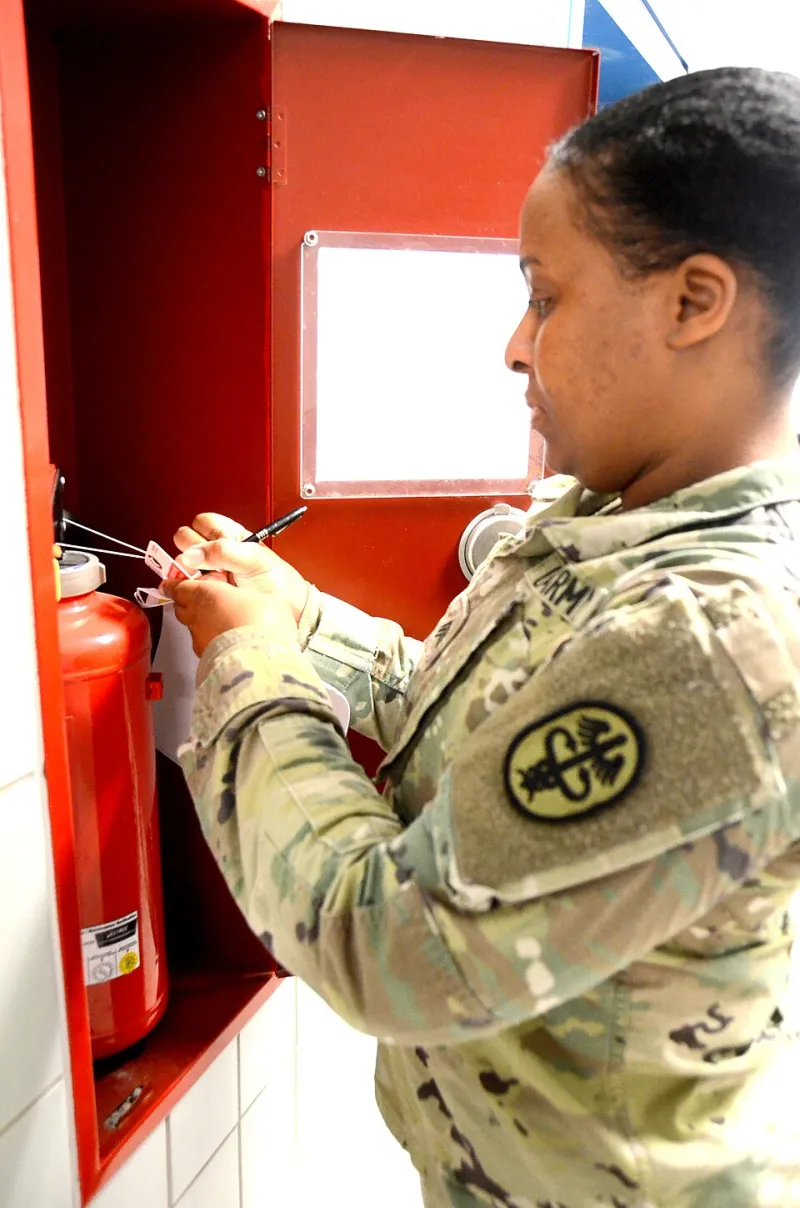
Photo: U.S. Army USAG-RP by Keith Pannell, Public domain, via Wikimedia Commons
For most of the country, the arrival of spring feels like relief. Temperatures climb, snow retreats, and the operational pressures that winter imposes on logistics, staffing, and outdoor access begin to ease. But for facility managers, the spring thaw initiates something else entirely: a damage audit season that winter spent months quietly preparing.
The problem with winter damage is not that it happens suddenly. It is that it happens invisibly. Ice, snow, and sub-freezing temperatures do not destroy surfaces in a single dramatic event. They work incrementally, concealing their progress beneath layers of frost and accumulation until the moment conditions change — and the full scope of deterioration becomes impossible to ignore.
What Winter Actually Does to Your Facility
To understand why spring reveals so much damage, it helps to understand how winter inflicts it.
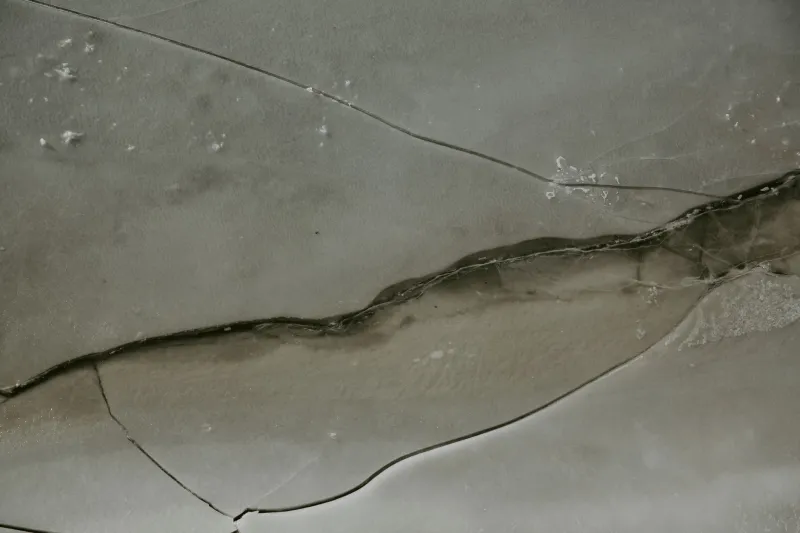
The most destructive force is not temperature alone but the cycle of freezing and thawing that occurs repeatedly throughout the season. When water infiltrates even microscopic cracks in concrete, masonry, asphalt, or metal joints, it expands by approximately nine percent upon freezing. That expansion exerts pressure far exceeding what most commercial materials are engineered to absorb over time. Each thaw releases that pressure momentarily, only for the next freeze to widen the crack slightly further. By the time temperatures stabilize above freezing for good, what began as a hairline fissure may have become a structural fracture.
Salt compounds this damage significantly. Deicing salts applied to parking lots, loading docks, and access roads are effective at preventing ice accumulation — but they are also chemically aggressive. Chloride ions penetrate porous concrete and reach the steel reinforcement inside, initiating corrosion that weakens structural integrity from within. On metal equipment, salt spray creates conditions for accelerated oxidation that no surface coating can indefinitely resist once it has been compromised by cold-weather contraction and abrasion.
Meanwhile, moisture that migrates into wall cavities, roof assemblies, and mechanical enclosures during the wet months of late fall and early winter has had the entire season to enable mold growth, insulation degradation, and electrical component corrosion — all of it hidden from view.
The Masking Effect: Why Damage Stays Hidden Until Spring
Winter does not just create damage. It conceals it. Snow and ice cover exterior surfaces that would otherwise show staining, cracking, or erosion. Frozen ground prevents settling and shifting from becoming visually apparent. Cold temperatures slow the biological processes that would otherwise make contamination visible through odor or discoloration.
This masking effect is precisely why facility managers are routinely blindsided when conditions improve. A loading dock apron that appeared structurally sound in November — because it was buried under compacted ice — may reveal significant spalling and joint failure in March. Roof drainage systems that seemed functional during winter precipitation events may expose themselves as completely blocked once snow melt volume exceeds what partial ice dams had been allowing through.
The danger is compounded by timing. Spring is not a gentle transition period. It is an operationally demanding season in its own right, bringing increased delivery traffic, outdoor workforce activity, and in many industries, a surge in production volume. Discovering structural or surface damage at precisely the moment operational pressure increases is not a coincidence — it is the predictable consequence of deferred inspection.
The Spring Damage Audit: What to Examine Before Warm Weather Accelerates Deterioration
Facility managers who approach spring proactively rather than reactively gain a critical window of opportunity. In the weeks immediately following the final freeze, before biological growth accelerates and before heat begins expanding and contracting compromised materials further, a methodical surface audit can distinguish between manageable maintenance and emergency repair.
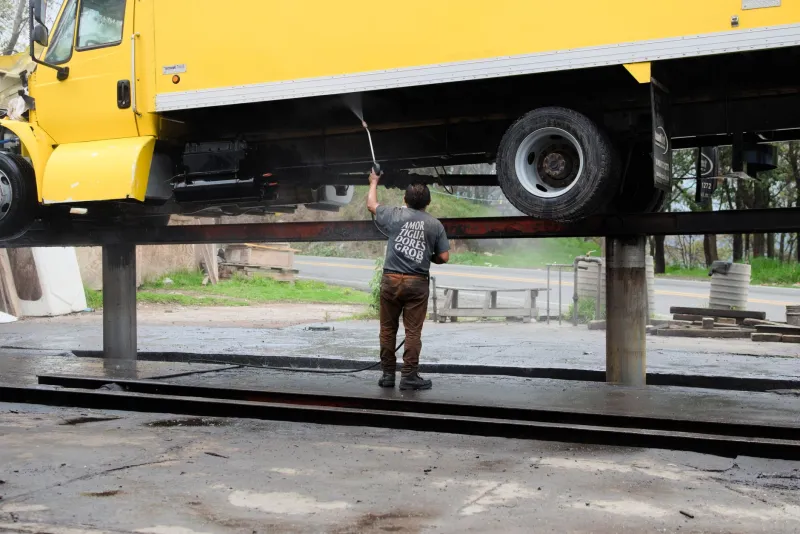
Exterior concrete and masonry should be examined for spalling, scaling, and joint separation. Pay particular attention to areas where deicing agents were applied heavily, as these surfaces absorb the greatest chloride load. Power washing these areas prior to inspection is not cosmetic — it removes the residual salt crust and biological matter that obscure surface-level damage from visual assessment.
Metal structures, railings, and equipment housings should be checked for rust bloom, paint failure, and fastener corrosion. Salt spray damage often manifests first at weld points and mechanical connections, which are the most structurally significant locations and the most frequently overlooked during cursory walkthroughs.
Roof drainage and gutter systems require immediate clearance and flow testing. Debris accumulation combined with ice dam formation can leave drainage channels partially or fully obstructed. A blocked system during spring rain events creates ponding conditions that accelerate roof membrane degradation and can force water into wall assemblies that winter already compromised.
Loading dock surfaces and seals experience some of the highest traffic and chemical exposure of any facility area. Dock leveler pits, threshold plates, and dock seals should be inspected for deterioration that heavy winter use may have initiated but that snow and equipment positioning concealed.
HVAC and mechanical equipment exteriors are frequently overlooked in spring audits but represent significant risk. Condenser coils, exhaust vents, and exterior unit housings accumulate biological debris and salt residue over the winter months. Professional cleaning of these components before they enter peak operational demand is not maintenance — it is loss prevention.
Why Professional Cleaning Is the First Step, Not the Last
A spring damage audit conducted on uncleaned surfaces is an incomplete audit. Grime, salt residue, biological growth, and winter debris are not simply cosmetic concerns — they are diagnostic interference. Inspectors and facility engineers cannot accurately assess the condition of a surface they cannot see clearly.
Professional power washing prior to a spring structural assessment accomplishes two things simultaneously. It removes the contaminant layer that obscures damage from view, and it eliminates the ongoing deterioration that those contaminants — particularly salt and biological matter — continue to cause even after winter has ended. Salt does not stop corroding metal simply because temperatures rise. Biological growth accelerates as warmth returns. Deferred cleaning in spring is not a neutral decision; it is an active choice to allow winter damage to compound.
At Evershine Power Laundry, our commercial and industrial cleaning protocols are specifically structured to support post-winter facility assessments. Thorough exterior surface cleaning conducted in the early weeks of spring gives facility managers and their inspection teams the clearest possible picture of what winter has done — and the maximum time to address it before warm-weather operational demands eliminate the margin for planned repairs.
The Cost of Waiting
Facility managers who defer their spring assessment until damage becomes operationally disruptive consistently face the worst version of every repair scenario. Emergency concrete patching costs two to three times what planned restoration costs. Unplanned equipment downtime during peak production periods carries financial consequences that dwarf the investment in preventive maintenance. And regulatory or insurance complications arising from documented neglect of identifiable structural issues carry costs that are frequently uncapped.
Winter does not announce when it has finished its work. The spring thaw does that on winter's behalf — and it does so on a schedule that waits for no one. The facility managers who fare best are those who understand that the end of winter is not the end of winter's consequences. It is the beginning of the window in which those consequences can still be managed.