How Winter Converts Neglected Grime Into a Structural Wrecking Crew
There is a widespread assumption among facility managers that winter damage is primarily a function of temperature. If surfaces are structurally sound going into the cold season, the reasoning goes, they will emerge from it in acceptable condition. This assumption is incorrect—and the cost of holding it is measured in cracked loading docks, corroded structural steel, and spring repair budgets that bear no resemblance to what was planned.
The real mechanism of winter surface damage is not cold in isolation. It is the interaction between cold and the contaminants that accumulate on commercial surfaces throughout the preceding months. Dirt, biological growth, salt residue, and trapped moisture do not simply sit on surfaces during winter. They become active agents of destruction, exploiting every freeze-thaw cycle to drive damage deeper into the material substrate.
Understanding this process is the first step toward preventing it.
The Physics of Freeze-Thaw Destruction
Water expands by approximately nine percent when it transitions from liquid to ice. On a clean, sealed surface, this expansion is largely superficial—water freezes at the surface and the pressure dissipates outward. On a contaminated surface, the dynamic is fundamentally different.
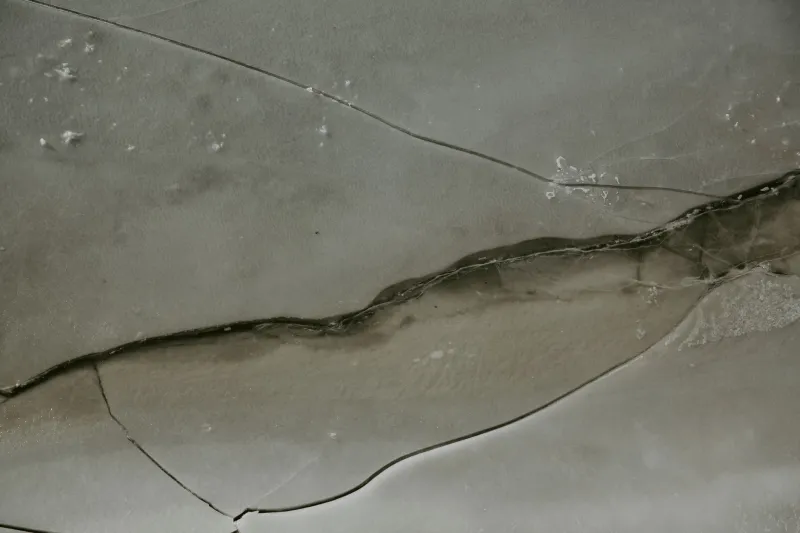
Porous materials like concrete and masonry are particularly vulnerable. Over the course of a year, surface contamination—organic matter, particulate buildup, algae, and biological film—works its way into surface pores and micro-fissures. When moisture accompanies that contamination into subsurface voids, it is effectively trapped. As temperatures drop below freezing, that trapped moisture expands. The force generated within a confined pore is substantial enough to fracture the surrounding material.
Repeat this process across dozens or hundreds of freeze-thaw cycles in a single winter—a common occurrence throughout the Midwest, Northeast, and mountain states—and what began as a micro-fissure becomes a crack. What began as a crack becomes a structural breach.
Metal surfaces experience a parallel but chemically distinct process. Contamination, particularly the salt residue that accumulates from road spray, coastal air, or de-icing applications, creates an electrochemical environment that accelerates corrosion. When moisture is present—as it invariably is in winter—salt-contaminated metal surfaces undergo galvanic corrosion at a rate dramatically higher than clean surfaces. Cold temperatures do not slow this process. In many cases, the cycling of freeze and thaw accelerates the penetration of corrosive agents into surface coatings and base metals.
What's Already on Your Surfaces Going Into Winter
The contamination profile of a typical commercial facility by late autumn is more complex than most managers appreciate. Consider the layers that accumulate between spring and fall:
Atmospheric particulate—exhaust, industrial emissions, pollen, and dust—settles on horizontal surfaces and adheres to vertical facades through moisture cycles. This layer creates a porous matrix that traps additional moisture and provides a growth medium for biological organisms.
Biofilm—the thin but tenacious community of bacteria and microorganisms that colonizes damp commercial surfaces—is present on most exterior concrete, masonry, and metal by midsummer. Biofilm retains moisture at the surface level and chemically interacts with substrate materials, etching into concrete and creating micro-pitting on metal that compromises protective coatings.
Salt residue accumulates throughout the year in coastal regions and along roadways that receive winter treatment. By autumn, this residue has often bonded to surface materials, making it invisible to casual inspection but chemically active under winter moisture conditions.
Taken together, these contamination layers transform a surface that appears weathered but functional into a system primed for accelerated winter damage.
Loading Docks, Parking Structures, and Exterior Metal: The High-Risk Inventory
Not all surfaces carry equal risk entering the winter season. Facility managers conducting pre-winter assessments should prioritize the following asset categories:
Concrete loading docks and aprons represent some of the highest-value and highest-risk surfaces on an industrial property. They bear heavy mechanical loads, are exposed to fuel and fluid contamination, and typically accumulate significant organic and chemical residue. When freeze-thaw forces act on contaminated loading dock concrete, the result is surface spalling, joint failure, and in severe cases, subsurface delamination that requires full slab replacement.
Parking structures and surface lots are similarly vulnerable. Expansion joints in parking structures are designed to accommodate thermal movement, but contamination within and around those joints compromises their function. When debris and biological matter prevent joints from expanding and contracting properly, the stress is transferred to the surrounding concrete—accelerating cracking and structural fatigue.
Exterior structural steel and metal cladding carry corrosion risk that winter amplifies significantly. Steel that enters the cold season with salt residue and compromised protective coatings will experience measurable corrosion progression within a single winter. In facilities where structural steel is load-bearing, this is not a cosmetic concern—it is a safety and liability issue.
Roof drainage systems and gutters accumulate organic debris that retains moisture and creates ice dam conditions. When water cannot drain freely, it pools and freezes, adding weight loads and directing moisture into building envelope systems not designed to handle standing water.
Why Power Washing Before Winter Is a Structural Investment
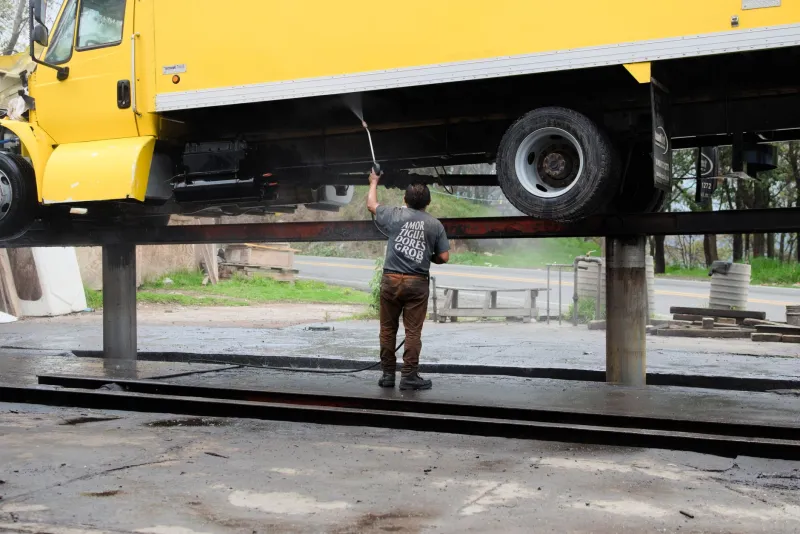
Pre-winter power washing removes the contamination layers that enable freeze-thaw damage before winter conditions arrive. This is not a matter of aesthetics. It is a matter of removing the mechanism through which winter temperatures cause structural harm.
High-pressure hot water washing clears biofilm, salt residue, organic matter, and particulate from surface pores and fissures—eliminating the moisture-trapping conditions that drive freeze-thaw expansion. On metal surfaces, professional pressure washing removes salt and corrosive residue, restoring the clean substrate that protective coatings require to perform as designed.
The economic case is direct. Professional pre-winter surface cleaning on a commercial facility represents a defined, manageable expense. Concrete repair following a single winter of freeze-thaw damage—spall patching, joint replacement, or slab work—routinely costs multiples of that figure. Structural steel remediation and recoating following corrosion progression is more expensive still.
Beyond direct repair costs, damaged surfaces create liability exposure. Cracked loading docks and deteriorating parking surfaces are slip-and-fall hazards. In a regulatory and insurance environment that scrutinizes facility condition carefully, deferred surface maintenance is a risk that compounds with each passing season.
The Window Closes Faster Than You Think
Pre-winter power washing must be completed before temperatures drop consistently below the threshold at which cleaning solutions and pressure washing equipment operate effectively. In most northern US regions, that window closes in October or early November. Facilities that delay scheduling often find themselves unable to complete the service before the first hard freeze—and facing an entire winter with contaminated surfaces and no remediation option until spring.
At Evershine Power Laundry, we work with facility managers to schedule pre-winter surface cleaning before that window narrows. Our industrial-grade power washing equipment and professional cleaning protocols are designed to address the full contamination profile that commercial surfaces carry into the cold season—removing the conditions that winter needs to do its worst.