Clean Lines, Clear Numbers: Calculating the Real ROI of Professional Power Washing in Food Manufacturing
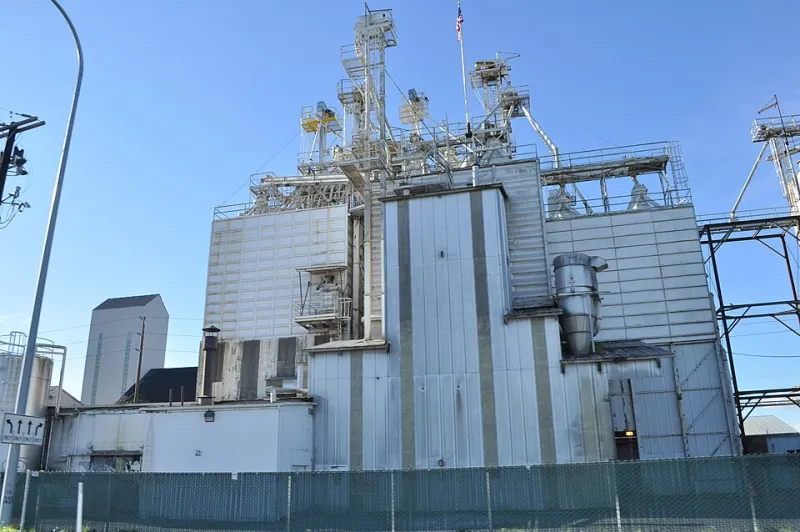
Photo: Joe Mabel, CC BY-SA 3.0, via Wikimedia Commons
In most industries, cleanliness is a maintenance consideration. In food manufacturing, it is an operational variable with direct, quantifiable influence on revenue, liability exposure, regulatory standing, and the long-term viability of the business itself. Yet despite the stakes, many food manufacturing facilities continue to treat professional power washing as a discretionary expense rather than what financial analysis consistently reveals it to be: one of the highest-return investments available to operations leadership.
This article examines the specific financial mechanisms through which professional cleaning programs generate measurable return in food manufacturing environments — and why the cost comparison between proactive and reactive sanitation protocols almost always resolves in favor of scheduled professional intervention.
The Baseline Cost of Contamination
Before calculating return, it is necessary to establish the cost of the alternative. What does contamination actually cost a food manufacturing facility that is not maintaining rigorous cleaning standards?
The most dramatic figure is recall cost. According to data from the Food Marketing Institute and the Grocery Manufacturers Association, the average direct cost of a food recall in the United States exceeds $10 million when accounting for product withdrawal, logistics, regulatory response, legal exposure, and brand remediation. That figure does not include the indirect costs — lost retail shelf placement, long-term customer attrition, and the insurance premium adjustments that follow a documented contamination event.
But recalls represent the catastrophic tail of a much longer cost curve. Below that threshold, facilities operating without disciplined cleaning protocols absorb ongoing costs that rarely appear as a single line item but accumulate with precision:
- HACCP non-compliance findings that trigger increased inspection frequency, corrective action plans, and in some cases, production holds
- Pathogen cross-contamination that degrades product quality without triggering a formal recall but generates customer complaints, returns, and account losses
- Biofilm formation on processing equipment that reduces sanitation effectiveness of chemical treatments, requiring higher concentrations and more frequent application to achieve the same result
- Equipment degradation caused by grease, organic residue, and mineral buildup that increases friction, heat, and wear on mechanical components
- Pest attraction driven by food residue accumulation in floor joints, drain channels, and equipment undercarriages
Each of these cost categories is addressable through professional power washing executed on a scheduled, documented basis. The question is not whether cleaning generates return — it is whether the return can be quantified convincingly enough to justify the investment in the face of competing budget priorities.
The HACCP Compliance Dividend
Hazard Analysis and Critical Control Points compliance is not optional in food manufacturing. It is the framework through which the FDA, USDA, and state-level food safety authorities evaluate facility risk and determine inspection posture. Facilities that demonstrate consistent, documented adherence to cleaning and sanitation protocols occupy a fundamentally different regulatory position than those that do not.
The financial value of that position is concrete. A facility with a strong cleaning documentation record and demonstrably clean processing surfaces is less likely to receive a Form 483 observation following an FDA inspection — and far less likely to face a Warning Letter, which triggers mandatory corrective action timelines, public disclosure, and in some cases, import alerts or consent decrees.
The cost of responding to a Warning Letter, even without a recall, routinely reaches six figures when attorney fees, compliance consultant engagement, facility modifications, and lost production during remediation are included. A professional cleaning program that prevents a single Warning Letter has, in that scenario alone, returned multiples of its annual cost.
Furthermore, facilities with clean, well-documented sanitation histories are in a substantially stronger negotiating position during FDA inspections. Inspectors are human beings operating within institutional frameworks that reward demonstrated compliance. A facility that can produce years of professional cleaning records, with service dates, surface areas addressed, chemical protocols employed, and technician certifications documented, presents a materially different profile than one that cannot.
Equipment Lifespan: The Slow-Burn ROI
The return on professional cleaning in food manufacturing is not limited to avoided regulatory costs. It accumulates steadily through the extended operational life of processing equipment.
Food manufacturing equipment represents some of the most significant capital investment on a facility's balance sheet. Conveyors, filling systems, slicing equipment, mixing vessels, and heat exchangers are engineered to precise tolerances and depend on clean operating conditions to perform within specification. When grease, protein deposits, mineral scale, and biological residue accumulate on mechanical components, the consequences compound progressively:
- Increased friction raises operating temperatures, accelerating bearing wear and seal degradation
- Residue accumulation in heat exchange systems reduces thermal efficiency, increasing energy consumption
- Biofilm formation on food contact surfaces creates sanitation-resistant reservoirs that chemical treatments cannot reliably reach
- Corrosion initiated by organic acids and cleaning chemical residue left on metal surfaces shortens the structural life of equipment frames and housings
A processing line component with a designed operational life of fifteen years, maintained under clean conditions, may require replacement in eight to ten years under contaminated operating conditions. The capital expenditure difference — accelerated depreciation, earlier replacement investment, and the production disruption associated with unplanned equipment failure — is measurable and significant.
Professional power washing, particularly high-pressure cleaning of equipment exteriors, undercarriages, and surrounding floor and wall surfaces, removes the contamination load that drives this accelerated degradation. The cleaning investment is not a cost — it is a capital preservation strategy.
Proactive vs. Reactive: The Cost Comparison
The most instructive financial comparison available to food manufacturing operations managers is not between cleaning and not cleaning. It is between proactive scheduled professional cleaning and reactive emergency sanitation following a contamination event.
A proactive professional cleaning program for a mid-sized food manufacturing facility — encompassing scheduled power washing of processing areas, equipment exteriors, floor drains, loading areas, and exterior surfaces — typically costs between $2,000 and $8,000 per month depending on facility size, surface complexity, and cleaning frequency. That is a predictable, budgetable operating expense.
An emergency sanitation response following a confirmed pathogen detection or regulatory finding is a categorically different financial event. Emergency sanitation contractors command premium rates for rapid-response deployment. Production halts during the remediation period eliminate revenue while fixed costs continue accruing. If the contamination has progressed to a formal recall, the cost structure discussed earlier applies. If the event generates litigation — from a customer illness, a regulatory enforcement action, or a product liability claim — legal costs alone can exceed the entire multi-year budget of a proactive cleaning program.
The arithmetic is not subtle. Facilities that invest in professional cleaning consistently spend less, produce more reliably, and carry lower liability exposure than those that do not.
Building the Business Case Internally
For operations managers who recognize the value of professional power washing but face budget scrutiny from financial leadership, the most effective approach is translation: converting cleaning investment into the financial language that CFOs and ownership groups respond to.
The calculation begins with identifying the facility's specific risk profile. What is the cost of a production halt? What is the average recall cost for the product category? What equipment replacement cycles are currently projected, and how does accelerated degradation alter those timelines? What is the current inspection frequency, and what would a Warning Letter remediation process cost?
With those figures established, the annual cost of a professional cleaning program becomes straightforward to evaluate as risk mitigation investment rather than overhead. In most food manufacturing environments, the breakeven point — the point at which a single avoided incident fully covers the annual cleaning investment — arrives well within the first year.
At Evershine Power Laundry, we work directly with food manufacturing facility managers and operations leadership to develop cleaning protocols that align with HACCP documentation requirements, production schedules, and capital preservation priorities. The goal is not simply clean surfaces — it is a measurable, defensible return on every dollar invested in industrial-grade sanitation.