The Paper That Protects You: Why Your Cleaning Records Are a Legal and Financial Asset You May Be Undervaluing

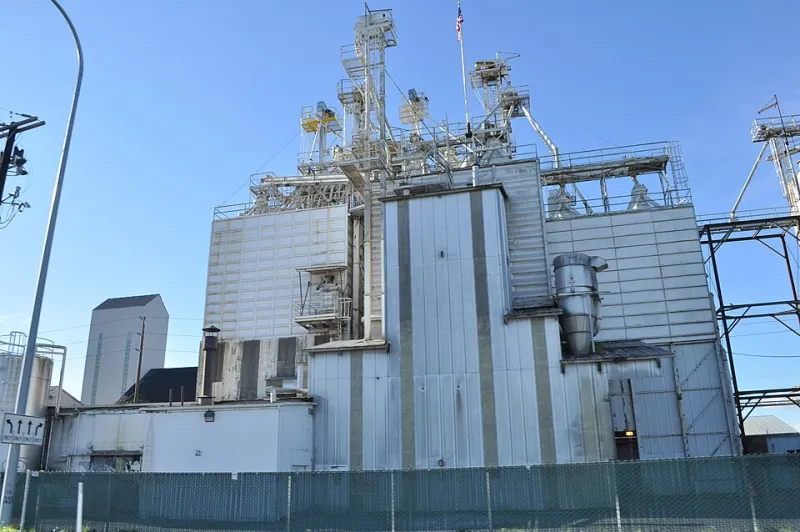
Photo: U.S. Army Corps of Engineers Europe District from Wiesbaden, Germany, Public domain, via Wikimedia Commons
There is a version of facility management in which cleaning documentation is a compliance checkbox — something produced to satisfy an inspector, filed in a binder, and largely forgotten until the next inspection cycle. And then there is the version that actually reflects how cleaning records function when circumstances become serious.
In insurance claims, regulatory investigations, product liability litigation, and lease disputes, the documentation generated by professional commercial cleaning services has repeatedly demonstrated the capacity to shift outcomes in ways that no other operational record can replicate. The facilities that understand this — and that structure their cleaning programs accordingly — occupy a materially stronger position when scrutiny arrives. Those that do not are frequently left arguing from memory against opponents who are arguing from evidence.
This is not a hypothetical concern. It is a pattern that plays out in courtrooms, regulatory proceedings, and claims adjusters' offices across the country with enough regularity that it warrants serious attention from anyone responsible for a commercial or industrial facility.
What Professional Cleaning Documentation Actually Contains
To understand why cleaning records function as legal assets, it helps to understand what rigorous professional documentation actually captures — and how it differs from internal cleaning logs maintained by facility staff.
A professional cleaning service operating at the level that matters for documentation purposes produces records that include, at minimum: the specific date and time of each service, the surfaces and areas addressed, the cleaning methods and equipment employed, the chemical compounds used and their concentrations, the technician or crew responsible for the work, and in many cases, photographic evidence of surface conditions before and after the cleaning event.
Internal cleaning logs, by contrast, typically record only that a cleaning task was performed — a checkmark next to a line item, initialed by whoever happened to be responsible that shift. These records are not without value, but they lack the specificity, third-party credibility, and evidentiary weight that professional service documentation carries.
The distinction matters because when a claim, investigation, or lawsuit turns on the question of what condition a surface was in on a specific date, the answer provided by a professional cleaning company's service record — with technician identification, chemical protocols, and photographic documentation — is qualitatively different from an internal log that says "floor cleaned" with a checkmark.
Insurance Claims: Where Documentation Earns Its Keep
Property and liability insurance claims are among the most common contexts in which cleaning documentation proves its financial value. The scenarios are varied, but the underlying dynamic is consistent: an insurer seeking to limit its exposure will examine every available piece of evidence regarding facility maintenance practices, and the presence or absence of cleaning records directly influences claim outcomes.
Consider a slip-and-fall incident in a commercial facility. When a plaintiff's attorney argues that the floor surface was chronically contaminated and that the facility operator knew or should have known about the hazard, the defense requires evidence of consistent, documented maintenance. A multi-year record of professional floor cleaning, with service dates, methods, and technician signatures, does not guarantee a favorable outcome — but it materially changes the evidentiary landscape. It demonstrates that the facility was maintained to a standard, that contamination was regularly addressed, and that the incident was not the predictable consequence of systemic neglect.
In property damage claims, cleaning documentation serves a different but equally important function. When a facility seeks coverage for equipment damage or structural deterioration and the insurer raises questions about whether the damage resulted from deferred maintenance rather than a covered event, service records that demonstrate consistent professional maintenance of the affected systems become a direct counterargument to the insurer's denial rationale.
Claims adjusters are trained to identify maintenance gaps. A facility that cannot produce cleaning records covering the period preceding a claim creates an evidentiary void that adjusters routinely fill with assumptions unfavorable to the policyholder. A facility with comprehensive professional service documentation eliminates that void.
Regulatory Investigations: The Difference Between Cooperation and Exposure
In regulated industries — food manufacturing, healthcare, hospitality, chemical processing, and others subject to OSHA, FDA, EPA, or state-level oversight — the arrival of a regulatory investigator following an incident, complaint, or routine inspection transforms cleaning documentation from a maintenance record into a compliance defense.
The regulatory dynamic is straightforward: an agency investigating a facility for a contamination event, a worker safety incident, or a code violation will request documentation of maintenance and cleaning practices as a standard component of the investigation. Facilities that can produce comprehensive professional cleaning records — demonstrating that surfaces were maintained according to a defined schedule, that hazardous materials were appropriately managed, and that the facility met or exceeded applicable sanitation standards — are in a position to demonstrate good faith compliance. Facilities that cannot produce those records face a presumption that maintenance was inadequate.
In FDA food safety investigations, this dynamic is particularly consequential. When a facility can produce years of HACCP-aligned cleaning documentation from a professional service provider — records that demonstrate consistent attention to food contact surfaces, drain systems, equipment exteriors, and processing area floors — the investigative posture of the agency shifts. The documentation does not make a facility immune from findings, but it establishes a baseline of demonstrated compliance that influences both the scope of the investigation and the severity of any resulting enforcement action.
The absence of such documentation, conversely, invites the agency to assume the worst about historical practices — and regulatory agencies are institutionally inclined to do exactly that.
Litigation: When Cleaning Records Become Exhibits
Civil litigation involving commercial facilities — product liability claims, personal injury suits, property damage disputes, and commercial lease conflicts — increasingly turns on documentary evidence of maintenance practices. In this context, professional cleaning records function as exhibits with the potential to determine liability outcomes.
In product liability cases involving food or beverage manufacturers, plaintiffs routinely argue that contaminated production environments caused the harm alleged. A defendant that can produce detailed professional cleaning documentation — demonstrating that every relevant surface was maintained according to a defined protocol, that cleaning events were executed by certified technicians using approved methods, and that the documentation chain is complete and unbroken — has a fundamentally stronger defense than one arguing that cleaning happened but cannot prove it.
In commercial lease disputes, cleaning documentation serves a different function: it establishes the condition of the premises at specific points in time. When a landlord claims that a tenant caused property damage, or when a tenant disputes a security deposit deduction, the party with documented evidence of surface conditions at specific dates holds the evidentiary advantage. Professional cleaning records, particularly those accompanied by photographic documentation, provide exactly that.
Building a Documentation Program That Actually Protects You
Recognizing the value of cleaning documentation is only the first step. The protection it provides is proportional to the completeness, consistency, and credibility of the records produced. Intermittent cleaning with incomplete documentation is substantially less defensible than a structured program with a continuous, detailed record.
The most effective approach combines several elements: a defined cleaning schedule executed by a professional service provider, service records that capture the specific information outlined earlier, photographic documentation of surface conditions, and a systematic retention policy that preserves records for a period consistent with applicable statutes of limitations and regulatory record-keeping requirements.
For most commercial and industrial facilities in the United States, a minimum retention period of five to seven years is appropriate for cleaning records that may be relevant to insurance, regulatory, or litigation matters. Some industries and jurisdictions require longer retention periods, and facilities should confirm applicable requirements with legal counsel.
At Evershine Power Laundry, our service documentation is designed with this evidentiary function in mind. Every service we perform generates a complete record — dated, detailed, and structured to meet the standards that insurance adjusters, regulatory investigators, and attorneys expect when records are called into question. We do not simply clean your facility. We create the paper trail that protects it.
The Undervalued Asset
Facility managers who view cleaning documentation as administrative overhead are, in effect, declining a form of institutional protection that costs nothing beyond the discipline of maintaining it. The cleaning will happen regardless. The question is whether the record of that cleaning is comprehensive enough to function as an asset when it needs to.
The facilities that answer that question correctly — before the claim, the investigation, or the lawsuit arrives — are the ones that find themselves in a position of strength when it matters most.