Fine Print, Real Losses: How Unaddressed Surface Contamination Quietly Voids Your Equipment Warranties
When a piece of industrial equipment fails, most facility managers reach for one document first: the manufacturer warranty. It represents a financial backstop—a formal promise that the investment is protected. What far fewer managers anticipate is that the warranty itself may already be compromised, not by mechanical defect or improper installation, but by something as preventable as accumulated surface contamination.
Manufacturer warranty language has grown increasingly specific over the past decade. Where older agreements once contained broad maintenance requirements, today's documents frequently enumerate precise environmental and cleanliness standards. Failing to meet those standards—even when no other operational negligence occurred—can be sufficient grounds for a denied claim.
Understanding this dynamic is not a matter of legal caution alone. It is a matter of operational finance.
What Warranty Maintenance Clauses Actually Say
Most equipment warranties contain language that falls under a category manufacturers call "owner obligations" or "maintenance requirements." These clauses are not decorative. They are enforceable.
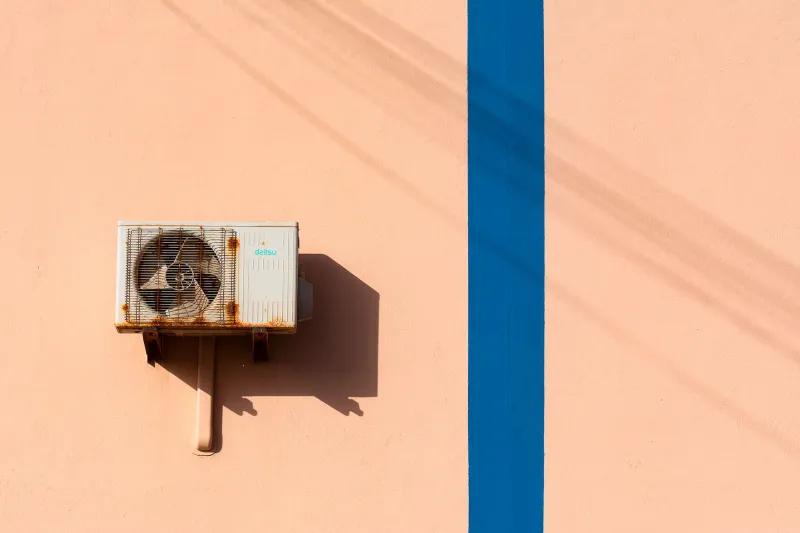
In the HVAC sector, for example, leading manufacturers explicitly state that failure to maintain clean coils, condensate pans, and exterior cabinet surfaces can void coverage related to compressor failure and refrigerant system damage. The logic is straightforward from the manufacturer's perspective: contamination alters thermal performance, increases mechanical stress, and accelerates component wear. If that wear leads to failure, and the contamination was preventable, the manufacturer has documented grounds to deny the claim.
Similar language appears in warranties for industrial generators, commercial kitchen exhaust systems, rooftop mechanical units, and electrical switchgear enclosures. In each case, accumulated grime, mineral scale from hard water, or biological growth such as algae and mold are identified as conditions that the owner is obligated to prevent.
The challenge for facility managers is that this language is rarely highlighted during the purchase process. It surfaces—often for the first time—when a claim is filed and a manufacturer's technician conducts an inspection.
The Inspection That Changes Everything
When equipment fails and a warranty claim is initiated, manufacturers routinely dispatch field technicians to assess the unit before authorizing any repair or replacement. These inspections are thorough. Technicians are trained to identify signs of neglect, and surface contamination is among the most visible and documentable forms of it.
Consider a scenario common in commercial food processing facilities: a refrigeration condensing unit fails after five years of operation. The unit is within its warranty period. However, the inspection reveals a dense accumulation of grease, airborne particulate, and mineral deposits across the condenser coils and cabinet exterior. The technician documents reduced airflow, elevated operating temperatures, and stress fractures consistent with thermal overload. The manufacturer denies the claim, citing the maintenance clause. The facility absorbs the full replacement cost.
This outcome is not hypothetical. It represents a pattern that recurs across industries—from manufacturing plants to commercial laundries to logistics warehouses—wherever exterior equipment cleaning has been treated as optional rather than essential.
Mineral Deposits: The Slow Warranty Killer
Of all the contaminants that trigger warranty disputes, mineral deposits may be the most underestimated. In regions with hard water—which encompasses a significant portion of the United States, including the Southwest, Midwest, and parts of the Southeast—calcium and magnesium scale accumulate on exterior equipment surfaces with remarkable speed.
On cooling towers, evaporative condensers, and outdoor mechanical units, mineral scaling reduces heat transfer efficiency and creates surface conditions that accelerate corrosion. On electrical enclosures, mineral residue from irrigation overspray or roof drainage can compromise seal integrity and create conductive pathways that void electrical equipment warranties outright.
The critical point is that mineral deposits are not passive. They trap moisture, harbor microbial growth, and chemically interact with metal surfaces in ways that compound over time. A surface that appears merely dirty is often undergoing active degradation—degradation that a manufacturer's inspector will attribute to owner negligence.
Building a Cleaning Record That Protects Your Warranty
The most effective defense against a warranty dispute is not a cleaning event—it is a cleaning record. Manufacturers who deny claims based on maintenance failures are responding to the absence of evidence as much as the presence of contamination. A documented history of professional cleaning services creates a counter-narrative that is difficult to dismiss.
Facility managers should establish and maintain the following practices to protect warranty standing:
Review warranty documentation at the time of equipment installation. Identify all maintenance clauses, note the specific cleaning requirements, and flag any language that references professional service standards. Do not rely on memory or informal summaries.
Schedule cleaning intervals that align with or exceed manufacturer recommendations. If a warranty requires quarterly exterior cleaning, build that schedule into the facility maintenance calendar before the equipment is commissioned.
Use professional cleaning services that provide written documentation. Service reports should include the date of service, the surfaces cleaned, the methods and materials used, and the name of the technician or company. This documentation becomes part of the equipment's maintenance file.
Photograph equipment surfaces before and after each cleaning. Visual records supplement written documentation and provide unambiguous evidence of maintenance activity.
Retain all maintenance records for the full duration of the warranty period, plus an additional buffer. Warranty disputes can arise months after a claim is filed, and documentation requests can extend beyond initial submission.
The Cost Comparison That Matters
The financial argument for professional exterior equipment cleaning is most clearly expressed in a direct comparison. A scheduled power washing service for a mid-size facility's exterior mechanical equipment typically represents a modest recurring expense. A denied warranty claim on a single major unit—a rooftop HVAC system, an industrial compressor, a commercial refrigeration bank—can generate repair or replacement costs that are orders of magnitude larger.
Beyond the direct cost of replacement, a denied warranty claim eliminates the coverage buffer that facility budgets depend upon. Equipment that loses warranty protection must be carried as a full financial liability, which alters depreciation calculations, insurance coverage assessments, and capital reserve planning.
Negligence in exterior cleaning does not simply accelerate equipment wear. It systematically dismantles the financial protections that make large equipment investments manageable.
Protecting What You've Already Paid For
At Evershine Power Laundry, our approach to industrial equipment cleaning is grounded in the understanding that clean surfaces are not cosmetic—they are contractual. Every service we provide is documented, every schedule is calibrated to manufacturer standards, and every client receives records that can withstand inspection.
The warranty you hold is only as strong as the maintenance record behind it. Investing in professional, documented cleaning services is the most straightforward way to ensure that the protection you purchased remains intact when you need it most.