What Dust Is Actually Costing You: The Quantifiable Overhead Burden of Neglected Industrial Surfaces
There is a category of operational expense that never appears on a purchase order, never triggers a budget alert, and rarely earns a line in a quarterly review. Yet it compounds month after month, embedded in your energy bills, your equipment replacement cycles, your maintenance labor hours, and your workforce productivity metrics. It is the cost of surface contamination—dust, particulate buildup, grease film, and debris accumulation on the industrial structures and equipment that run your facility.
Facility managers routinely scrutinize supply chain costs, staffing ratios, and utility contracts. Far fewer apply the same analytical rigor to the surfaces those assets sit on, operate within, or depend upon for thermal regulation. That oversight is expensive. Understanding precisely where the costs accumulate—and at what threshold professional intervention generates a positive return—is not a theoretical exercise. It is a practical financial imperative.
The HVAC Penalty: When Dirty Surfaces Become Energy Surcharges
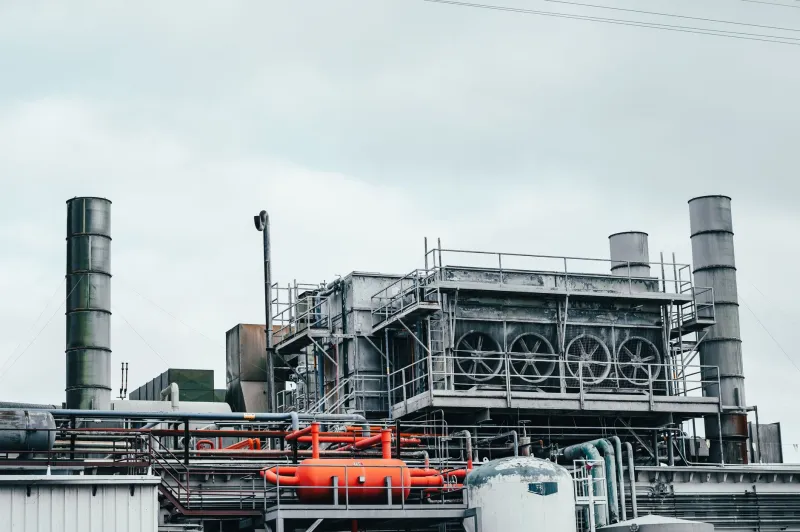
Heat exchange efficiency is among the most sensitive performance variables in any industrial HVAC system, and it degrades in direct proportion to surface contamination. When condenser coils, air intake louvers, and ventilation ductwork accumulate dust and particulate matter, the system must work harder to move the same volume of conditioned air. The U.S. Department of Energy has documented that a layer of particulate buildup as thin as one-hundredth of an inch on heat transfer surfaces can reduce system efficiency by as much as 21 percent.
In practical terms, a facility running a 200-ton commercial HVAC system at reduced efficiency due to surface contamination may be absorbing $8,000 to $15,000 in excess annual energy costs—depending on regional utility rates and operational hours. That figure does not account for the compressor strain that shortened equipment lifespan introduces, nor does it include the increased frequency of filter replacements and service calls that dirty systems require.
Professional power washing of exterior HVAC components, cooling towers, and intake surfaces restores baseline thermal efficiency. When that restoration is quantified against the energy premium a contaminated system demands, the cost-benefit calculation frequently resolves in favor of scheduled professional cleaning within the first service cycle.
Particulate Load and the Worker Efficiency Equation
The connection between facility cleanliness and workforce productivity is well-documented in occupational health research, though it is rarely framed in financial terms during facility planning conversations. Airborne particulate matter generated by contaminated surfaces—dust disturbed by foot traffic, debris dislodged by equipment vibration, biofilm fragments aerosolized by ventilation systems—elevates the ambient particulate load that workers breathe throughout a shift.
The Occupational Safety and Health Administration links elevated particulate exposure to increased rates of respiratory irritation, fatigue, and absenteeism. Even at levels below formal citation thresholds, chronic low-grade particulate exposure has been associated in peer-reviewed literature with measurable reductions in cognitive performance and fine motor accuracy—both of which matter considerably in precision manufacturing, food processing, and pharmaceutical production environments.
When a facility experiences even a modest 3 to 5 percent reduction in effective labor output due to air quality degradation attributable to surface contamination, the dollar impact on a workforce of 80 employees earning an average of $22 per hour across a standard operating week exceeds $27,000 annually. That is not a hypothetical. It is arithmetic applied to documented performance data.
Accelerated Asset Depreciation: The Replacement Cycle Nobody Budgets For
Industrial equipment is designed and warranted to operate within defined environmental parameters. Those parameters assume a reasonable baseline of surface cleanliness on both the equipment itself and the structural environment in which it operates. When that baseline is not maintained, the gap between designed service life and actual service life widens—and the facility absorbs the financial difference.
Consider conveyor systems in food processing facilities. Grease accumulation and debris infiltration into bearing housings accelerate mechanical wear at a rate that maintenance engineers routinely observe but rarely quantify in terms of replacement cycle compression. A conveyor system rated for a 12-year service life under standard maintenance conditions may require major component replacement at year eight when surface contamination protocols are inconsistently applied. That four-year compression, amortized across a multi-line facility, can represent six-figure capital expenditure acceleration.
The same dynamic applies to flooring systems, structural steel, exterior cladding, and loading dock surfaces. Contamination that is allowed to bond chemically with surfaces—whether through carbonization, mineral deposition, biological adhesion, or oxidation—requires increasingly aggressive remediation the longer it is deferred. At some point, remediation yields to replacement. That inflection point is where deferred cleaning costs become capital costs.
Calculating the ROI Threshold for Professional Intervention
The financial case for professional power washing and commercial surface cleaning is most persuasive when it is built from the bottom up—starting with documented facility-specific costs rather than industry averages. However, a general framework for evaluating the ROI threshold is useful for facilities that have not yet conducted a formal analysis.
A mid-size industrial facility of approximately 80,000 square feet, operating on a deferred cleaning model, typically absorbs the following annual costs attributable to surface contamination:
- Energy premium from HVAC inefficiency: $9,000–$14,000
- Incremental maintenance labor on contaminated equipment: $6,000–$11,000
- Productivity loss from elevated particulate load: $18,000–$30,000
- Accelerated asset depreciation on affected equipment: $12,000–$25,000
- Regulatory exposure and compliance remediation costs: Variable, but frequently $5,000–$20,000 per incident
Against those figures, a comprehensive professional cleaning program—combining scheduled power washing of exterior surfaces, equipment exteriors, HVAC components, and high-traffic interior zones—typically ranges from $12,000 to $28,000 annually for a facility of that scale, depending on service frequency, surface complexity, and regional market rates.
The arithmetic is direct. A facility paying $20,000 per year for professional cleaning and avoiding $45,000 to $100,000 in contamination-driven overhead is not spending money on maintenance. It is generating a return on a cost-avoidance investment.
The Strategic Reframe: From Service Expense to Operational Defense
The persistent challenge in selling professional cleaning services to facility managers is not price resistance—it is category resistance. When cleaning is mentally filed under "operational overhead," it competes with every other discretionary line item in a budget review. When it is correctly categorized as a cost-avoidance and asset-protection strategy, it competes instead against the far larger costs it is designed to prevent.
Facility managers who have made this reframe consistently report that the shift in perspective changes not just how cleaning is budgeted, but how it is scheduled, documented, and communicated to ownership and finance teams. A cleaning service that generates a documented ROI becomes a defensible investment, not an uncomfortable expense.
At Evershine Power Laundry, our approach to commercial and industrial surface maintenance is grounded in exactly this framework. Industrial-grade clean is not an aesthetic standard. It is an operational one—and the difference between facilities that understand that distinction and those that do not is measurable in dollars, in equipment life, and in the competitive margin that comes from running a facility at designed efficiency rather than contamination-compromised performance.
The dust on your surfaces is not inert. It is billing you. The question is whether you are paying attention to the invoice.