Deferred Cleaning, Accelerated Failure: The True Capital Cost of Neglecting Industrial Equipment Exteriors

Every capital expenditure decision made inside a facility manager's office carries a history. Behind each emergency equipment replacement or unplanned service call is a sequence of smaller decisions—most of them invisible at the time—that allowed a manageable maintenance problem to become a budget crisis. In industrial and commercial facilities across the United States, one of the most consistently underestimated contributors to that crisis is the cleaning—or rather, the absence of cleaning—applied to dock equipment, HVAC housings, and machinery exteriors.
The assumption that these surfaces are secondary maintenance concerns, or that their condition is cosmetic rather than functional, costs facilities tens of thousands of dollars annually. The numbers, when examined honestly, tell a different story than most procurement teams expect.
What Accumulates When No One Is Watching
Dock levelers operate in some of the most hostile environments a piece of mechanical equipment can occupy. They are exposed to diesel exhaust, hydraulic fluid mist, road salt tracked in from delivery vehicles, standing water, and the constant mechanical stress of heavy load transfers. Without regular cleaning, the joints, pivot points, and lip mechanisms of a dock leveler accumulate a dense mixture of grime, corrosive particulate, and biological matter that accelerates metal fatigue and traps moisture against steel surfaces.
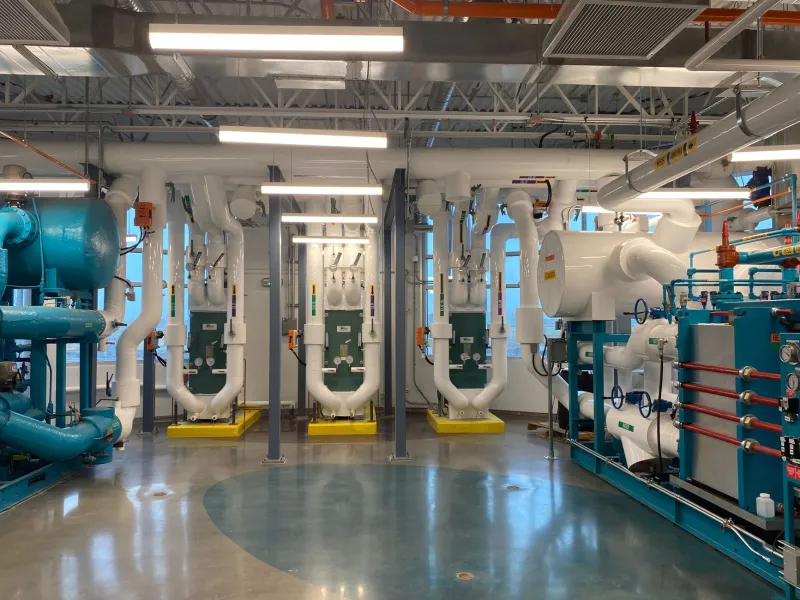
HVAC housings face a different but equally damaging combination of threats. Rooftop units in particular collect airborne grease from nearby exhaust systems, biological growth from moisture retention, and mineral scale from precipitation. When those housings are not cleaned on a consistent schedule, the contamination migrates inward—reducing airflow efficiency, straining motors, and shortening compressor life. The housing itself, if left in a state of sustained surface corrosion, can compromise the structural integrity of mounting brackets and drainage channels.
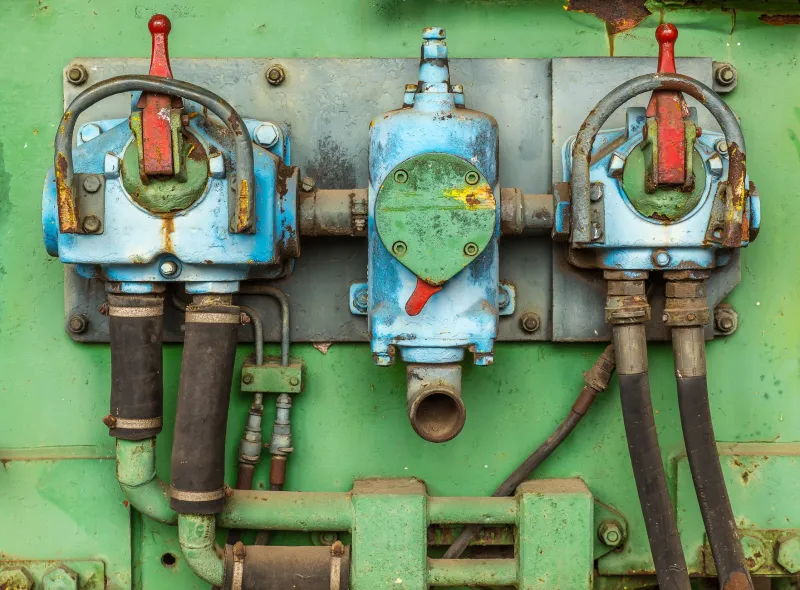
Machinery exteriors in production environments accumulate oil, coolant residue, metal shavings, and process byproducts that, over time, act as both a corrosive layer and an insulating blanket that traps heat against sensitive components. None of these outcomes are sudden. They are the predictable result of deferred attention.
Running the Numbers: Prevention Versus Replacement
A commercial dock leveler in active use carries a replacement cost that typically ranges from $4,000 to $8,000 for the unit itself, with installation labor pushing the total closer to $10,000 to $12,000 depending on facility configuration and regional labor rates. A hydraulic dock leveler at the higher end of the market, with full installation, can approach $15,000 or more. When a facility operates six to twelve dock positions, a single cycle of deferred-maintenance-driven replacements can represent a six-figure capital event.
Contrast that against the cost of a professional industrial power washing program that addresses dock equipment quarterly. Depending on facility size and service scope, a comprehensive exterior cleaning program—covering dock equipment, HVAC housings, and machinery exteriors—typically costs a fraction of what a single equipment replacement demands. The math is not complicated. What makes it complicated is the psychological distance between a cleaning invoice and a replacement purchase order. They feel like different categories of spending. They are not.
HVAC systems tell a similar story. Industry data consistently supports the finding that a rooftop unit operating with dirty coils and obstructed housings consumes significantly more energy than a clean, well-maintained unit—some estimates place the efficiency loss at 10 to 30 percent depending on the severity of fouling. Over a cooling season in a climate like Texas, Georgia, or the mid-Atlantic states, that efficiency gap translates directly into utility costs that dwarf the price of preventive cleaning. When compressor failure follows—and in heavily fouled systems, it does follow—the replacement cost for a commercial HVAC compressor can range from $1,500 to over $10,000, with emergency service premiums applied on top.
The Compounding Effect Nobody Budgets For
What makes deferred equipment cleaning particularly damaging from a financial planning perspective is its compounding nature. Contamination does not accumulate linearly. A dock leveler that receives no cleaning for eighteen months does not simply have 50 percent more grime than one neglected for nine months—it has a surface environment where early corrosion has created microscopic pitting that accelerates further corrosion, where joint contamination has begun to impair mechanical movement, and where the cost to restore the equipment to optimal operating condition has multiplied accordingly.
Facility managers who inherit neglected equipment often discover that the cleaning cost for a severely fouled system is substantially higher than it would have been on a consistent maintenance schedule—not because professional cleaning services charge more for difficult work, but because difficult work genuinely requires more time, more specialized equipment, and more careful technique to avoid damaging compromised surfaces.
This is the financial trap that deferred cleaning sets: it does not merely delay costs. It inflates them.
Reframing the Cleaning Budget Line
The most persistent obstacle to appropriate industrial cleaning investment is how it appears on a budget sheet. Cleaning services are categorized as operating expenses, while equipment replacement is capitalized. This accounting distinction creates a perverse incentive: facility managers under pressure to reduce operating costs can eliminate cleaning line items without those decisions appearing to affect capital budgets—until the capital budget absorbs the consequences.
A more accurate financial model treats professional industrial cleaning as asset protection expenditure. When the purpose of a cleaning program is to extend the service life of a $10,000 dock leveler by three to five years, or to preserve the efficiency and longevity of a $20,000 HVAC system, the return on that investment is concrete and calculable. Facilities that have adopted this framing consistently report that their cleaning programs pay for themselves through reduced repair frequency, extended equipment lifecycles, and lower energy consumption.
What a Professional Industrial Cleaning Program Actually Covers
A well-designed industrial exterior cleaning program is not a single pressure wash applied once a year. For dock equipment, it includes removal of compacted debris from mechanical joints, treatment of metal surfaces to inhibit future corrosion, and inspection-level attention that can flag developing mechanical issues before they escalate. For HVAC housings, it encompasses coil surface cleaning, drainage channel clearing, and removal of biological growth that compromises airflow and material integrity.
For machinery exteriors, professional power washing services use equipment and techniques calibrated to remove contamination without damaging seals, electrical components, or painted surfaces—a level of precision that general maintenance staff, working with consumer-grade equipment, cannot reliably deliver.
The industrial-grade clean that defines this category of service is not simply about appearance. It is about applying the right pressure, temperature, chemistry, and technique to surfaces that represent significant capital investments—and ensuring those investments perform as expected for as long as possible.
The Decision That Costs Nothing to Make
For facility managers evaluating their maintenance budgets, the question is not whether professional industrial cleaning is worth the expense. The question is how long the facility can afford to operate without it. Every quarter that dock levelers, HVAC housings, and machinery exteriors go without professional attention is a quarter in which deterioration compounds quietly and replacement timelines shorten.
The $40,000 mistake is not made all at once. It is made incrementally, one deferred cleaning cycle at a time, until the invoice for neglect arrives—and by then, it no longer fits in the maintenance budget at all.