Corrosion by Degrees: The Hidden Cost of Salt, Humidity, and Deferred Cleaning on Industrial Metal Assets
When the Environment Becomes the Enemy
Not all industrial facilities operate under the same atmospheric conditions. A distribution warehouse in the Ohio River Valley, a processing plant along the Gulf Coast, or a logistics hub in coastal New England each contends with a specific and relentless corrosion threat: salt. Whether delivered by ocean air, road de-icing operations, or industrial emissions, chloride-laden moisture is among the most destructive forces a metal asset can encounter. And in most facilities, it is also among the most underestimated.
The consequences are not merely cosmetic. When corrosion is allowed to advance unchecked, the structural integrity of loading dock equipment, exterior staircases, storage racking, HVAC enclosures, and overhead doors deteriorates at a rate that most maintenance budgets are not designed to absorb. The reckoning, when it arrives, tends to be expensive—and largely preventable.
The Chemistry Behind the Damage
Rust is not simply discoloration. It is the product of an electrochemical reaction in which iron, oxygen, and water interact to form iron oxide. In isolation, this process is gradual. In the presence of chloride ions—the chemical signature of salt—it accelerates dramatically.
Salt functions as an electrolyte, increasing the electrical conductivity of moisture on metal surfaces and enabling the corrosion reaction to proceed at a far greater rate than it would in clean, low-humidity air. Coastal environments introduce salt through airborne sea spray and fog. Salt-belt states, which include much of the Midwest, Northeast, and Mid-Atlantic, introduce it through road brine and de-icing compounds that are routinely tracked into facilities by vehicle traffic and foot movement.
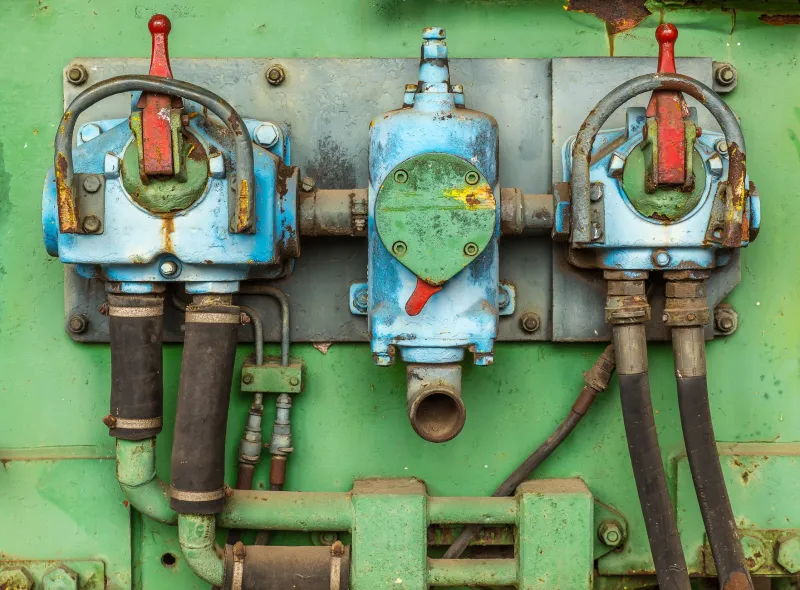
Once chloride ions breach a metal surface—whether through a scratch in a protective coating, a weld seam, or a joint connection—they initiate what is known as pitting corrosion. This localized form of degradation penetrates deeply and unevenly, creating structural weaknesses that are not apparent from a surface inspection. By the time rust is visible to the naked eye, the underlying damage may already be significant.
The Financial Arithmetic of Inaction
Facility managers frequently encounter pressure to defer non-emergency maintenance expenditures. Power washing, in particular, is often categorized as a discretionary line item—something to address when budget allows, rather than a scheduled operational necessity. In high-corrosion environments, this framing is financially inaccurate.
Consider the replacement cost of a single commercial overhead door in a salt-exposed loading dock environment: depending on size and specification, that figure can range from $3,000 to $10,000 or more, excluding installation. A set of exterior metal staircases or a rooftop HVAC housing can represent comparable or greater investment. When corrosion advances to the point of structural compromise, replacement—not repair—is frequently the only viable option.
Contrast that with the cost of scheduled professional power washing, which removes salt deposits, biofilm, and oxidation-promoting contaminants before they can initiate or accelerate the corrosion cycle. The differential is not marginal. Across a five-year maintenance horizon, facilities that implement proactive cleaning protocols consistently demonstrate lower capital replacement expenditures than those operating on a reactive model.
Insurance considerations add another layer of financial exposure. Corrosion-related equipment failures that result in workplace injuries or operational shutdowns may trigger claims scrutiny. Facilities unable to demonstrate a documented maintenance history can face adverse outcomes in coverage disputes—an outcome that compounds the original cost of neglect.
What a Proactive Cleaning Schedule Actually Looks Like
Effective corrosion management through professional cleaning is not a one-size-fits-all prescription. It requires calibration to the specific environmental conditions of each facility. That said, several structural principles apply broadly across industrial settings in salt-affected regions.
Quarterly cleaning cycles represent the recommended baseline for exterior metal surfaces in coastal zones and active salt-belt environments. This frequency ensures that chloride accumulation is disrupted before it reaches concentrations sufficient to initiate pitting corrosion. Facilities located more than 50 miles from the coast or in lower-traffic inland areas may sustain a semi-annual schedule, provided that post-winter cleaning occurs promptly after de-icing season concludes.
Post-storm and post-winter priority protocols should be established for any facility that experiences significant weather events. Salt-laden runoff, flooding, and freeze-thaw cycling each create conditions that accelerate surface degradation. A targeted cleaning response within 48 to 72 hours of a major event can interrupt the corrosion sequence before it gains momentum.
Surface-specific attention is equally important. Not all metal assets in a facility corrode at the same rate or through the same mechanism. Horizontal surfaces—roof decking, grating, equipment platforms—tend to accumulate standing moisture and therefore corrode faster than vertical surfaces exposed to natural drainage. Joints, fasteners, and weld points are disproportionately vulnerable due to their irregular geometry. A professional cleaning assessment should identify and prioritize these high-risk zones.
Hot-water pressure washing is particularly effective in salt-removal applications. The combination of elevated temperature and high-pressure delivery breaks down chloride deposits more thoroughly than cold-water methods, particularly in joints and surface irregularities where salt tends to concentrate. For facilities with painted or coated metal surfaces, appropriate pressure calibration ensures effective cleaning without compromising the protective layer itself.
The Role of Professional Assessment
One of the more significant limitations of in-house maintenance approaches is the absence of systematic corrosion tracking. A trained commercial cleaning professional does not simply clean a surface—they observe it. Early-stage pitting, coating failures, and rust migration patterns that are invisible to an untrained eye represent actionable information when identified promptly.
Facilities that engage professional cleaning services on a scheduled basis effectively gain a recurring inspection function as a secondary benefit. Observations documented over multiple service visits create a longitudinal record of surface condition that supports more accurate capital planning and helps maintenance teams prioritize repair expenditures before they become replacement expenditures.
Industrial-Grade Clean as a Preservation Strategy
There is a tendency in facility management to treat cleaning and maintenance as separate disciplines—one cosmetic, the other structural. In high-corrosion environments, that distinction does not hold. The removal of salt, oxidation-promoting contaminants, and biofilm from metal surfaces is, in a direct and measurable sense, a preservation intervention.
The facilities that manage corrosion most effectively are not those with the largest maintenance budgets. They are those with the most disciplined cleaning schedules—organizations that understand that the cost of prevention is always lower than the cost of replacement, and that industrial-grade cleanliness is not an aesthetic standard but an operational one.
For facilities operating in coastal or salt-belt regions, the question is not whether corrosion will occur. It will. The question is whether your maintenance program is structured to interrupt it before it reaches the point of financial consequence.